
.jpg)
Engineering challenges cost businesses millions in failed products, energy waste, and inefficiencies. A single design flaw can stall projects, cause recalls, and burn budgets. This is where a fluid dynamics consultant steps in. With CFD, you replace guesswork with reliable simulated data.
A fluid dynamics consultant brings real insight. They run CFD simulations early in design which yields measurable ROI. It also speeds up design cycles.
At NCES (Niharika Computational Engineering Solutions), we have more than 20 years of simulation experience and have solved complex problems across 8+ diversified industries. We’ve helped clients from data centers to medical devices, 5G/telecom to aerospace &defense.
Immediate Cost Savings& Performance Benefits
Working with a consultant saves money fast. You spend less on prototypes. You catch issues early. You prevent costly rework.
• CFD simulations cost 70–90% less than physical testing
Running virtual fluid flow and thermal models costs much less than building multiple prototypes. This helps in avoiding material costs and lab fees.
• Eliminate multiple prototype iterations
With CFD you test designs virtually. You adjust and iterate in software and launch with confidence.
• Prevent Costly Design Failures
A fluid dynamics consultant spots risk before you build. This reduces scrap and time is saved.
• Identify thermal hot spots before manufacturing
CFD pinpoints hot zones, flow stagnation, or poor mixing. This helps you tweak designs early.
• Avoid product recalls and warranty claims
Fix issues before they reach production. This reduces warranty spend. It protects your brand.
• Enhanced Product Efficiency
Good design means better cooling, smoother flow, and less wasted power.
• Optimize heat transfer and fluid flow
A well tuned thermal management solution ensures uniform temperature spread and steady flow.
• Improve cooling system performance by 15–40%
Real CFD cases show up to 40% better cooling efficiency in electronics or HVAC systems.
• Reduce energy consumption in HVAC and industrial systems
Better flow means lower fan power, less compressor load, and lower energy bills.
• Faster Time to Market
Virtual testing speeds things up. You validate sooner. You solve issues before prototyping.
• Accelerate design validation process
With simulation, you test multiple designs in parallel which cuts validation time drastically.
• Reduce development cycles by 30–50%
Companies often reduce development time nearly half by including CFD early.
• Competitive advantage through faster product launches
Beating competitors to market builds market share. A fluid dynamics consultant helps you get there fast.
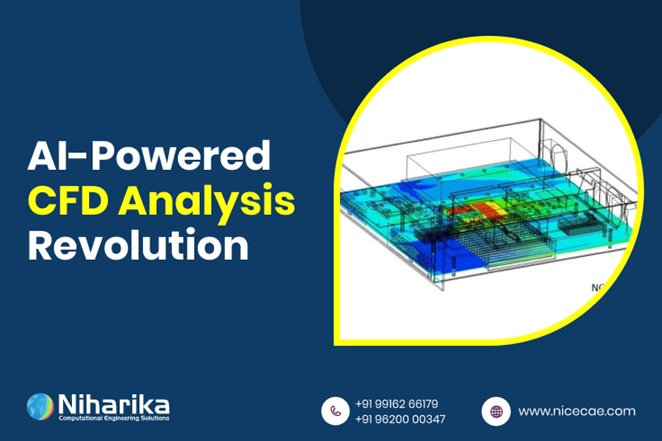
The role of CFD Analysis in optimizing data center performance.
Industry Specific ROI Examples
Let’s look at how ROI plays out in real sectors NCES works in.
Data Centers
• 20–30% reduction in cooling costs. CFD improves rack airflow, reduces hot spots, and enables smarter containment.
• Improved server reliability and uptime. Balanced cooling reduces failure rates and your equipment lives longer.
• Large data centers can save over $100,000 a year via cooling efficiency gains.
Semiconductor Industry
Heat and electronics go hand in hand. Controlling the temperature is vital.
• Thermal stress can ruin chips. Catching issues early saves millions in scrap or field failures.
• Optimizes chip packaging for thermal performance. CFD helps design heat sinks, vapor chambers, cold plates, or nanofluids to manage heat.
• Meets stringent reliability requirements. Semiconductor products must meet strict standards. CFD helps validate thermal design under those standards.
Medical Devices
Devices often handle fluids or need cooling. Flow control matters.
• Ensures regulatory compliance. CFD data supports regulatory filings. It shows you control risks.
• Reduces FDA approval delays. Clear thermal and fluid data helps avoid hold ups in approval.
• Minimizes liability risks. Early analysis lowers risk of failures, recalls, or patient harm.
5G/Telecom
5G electronics generate high heat. Passive cooling is common.
• Manages high heat flux in power amplifiers. CFD helps design heat spreaders or enclosures to manage pack level heat.
• Ensures device longevity and performance. Good cooling extends component life and performance consistency.
• Meets ETSI standards without over engineering. A precise thermal management solution avoids over design while meeting ETSI norms.
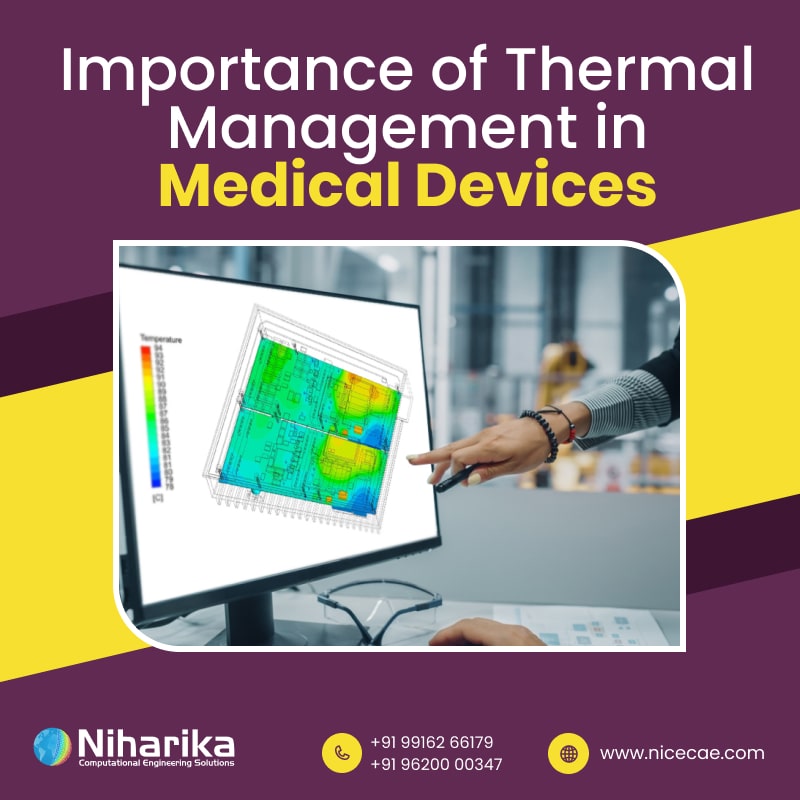
Understand why thermal management is the silent hero of high performance electronics.
Long Term Strategic Benefits
Benefits extend beyond immediate savings. You build stronger processes.
Risk Mitigation
• Identify potential failures early in design phase. CFD helps foresee failure modes before hardware exists.
• Reduces insurance and liability costs. Lower risk often means lower premiums and less legal exposure.
• Ensures compliance with industry standards. You can model to industry norms—ASHRAE, ETSI, medical device standards, and more.
Innovation Enablement
• Explore advanced cooling technologies. Simulate new materials, jets, phase change, cold plates, or nanofluids without costly prototypes.
• Virtual testing of complex scenarios. Run worst case load, transient start/stop, or leak and blockage scenarios virtually.
• Supports for next generation product development. When you innovate, you need insight. A thermal management solution through CFD guides development.
Across industries, ROI ranges from 5x to 15x thanks to prototype reduction, energy savings, fewer failures, and faster time to market.
NCES has worked in 8+ Industry sectors. Clients include ISRO, DRDO, GE, L&T, Tata Elxsi,Sabic and others. We have solved high impact challenges in data centers, semiconductors, medical devices, 5G/telecom, HVAC, aerospace & defence.
Reach out to NCES to review your product or system. We’ll assess ROI with real metrics. We’ll design a custom thermal management solution. A fluid dynamics consultant from NCES can guide you from concept through validation. Let’s talk about the real savings and better performance you can achieve.
.jpg)
 (1).jpg)
 (1).jpg)
 (1) (1).jpg)
 (3).jpg)

.jpg)
.jpg)
.jpg)

.jpg)
.jpg)
.jpg)
.jpg)
.jpg)
.jpg)
.jpg)
(1).jpg)
(1).jpg)
.jpg)
.jpg)
.jpg)


.jpg)



.jpg)


.jpg)