
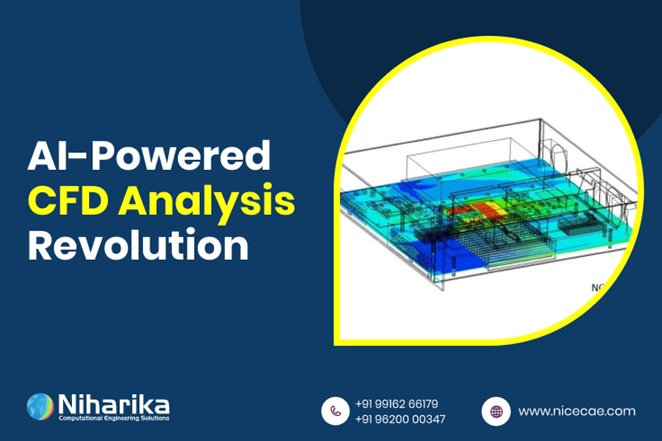
Computational Fluid Dynamics (CFD) analysis is the science of simulating fluid and heat flow. Engineers use software to model air, liquid, and thermal effects in systems. CFD helps predict how designs behave under real conditions.
AI (artificial intelligence) and ML (machine learning) now support many engineering services. They bring automation and smart decision‑making. Across fields like thermal design and structural analysis, AI/ML tools add value.
In CFD analysis, AI/ML is reshaping workflows. It cuts effort, improves accuracy, and speeds results. Engineers can deliver better output in less time. This shift holds special promise for data center CFD analysis and cooling analysis services where precision matters.
How AI/ML Enhances CFD Analysis
Here, we explore how AI/ML improves CFD. We focus on mesh, speed, and interpretation. Each area gains from smarter automation.
• Automated Mesh Generation
AI tools now help build meshes directly. They analyze geometry and create optimal grids without human input.
• AI algorithms optimize mesh quality and density
Algorithms pick mesh size and location. They refine areas with complexity. They avoid too coarse or overly fine zones.
• Reduces manual setup time by 60‑80%
This reduction in setup load saves hours per case. Engineers spend less time building and adjusting meshes.
• Improves solution accuracy through intelligent refinement
Mesh adapts where needed. AI spots critical zones and adjusts resolution. This yields more accurate flow and heat data.
• Faster Simulation Processing
AI also improves solver speeds. It makes simulations run much faster than traditional CFD.
• Machine learning accelerates solver convergence
ML models suggest better initial guesses. They speed up convergence which shrinks the overall compute time.
• Predictive models reduce computational time
AI models predict results without full simulation. They cut compute hours by approximating behavior.
• Real‑time optimization during simulations
Some tools tune parameters on the fly which helps reach stable solutions earlier in the run.
• Enhanced Result Interpretation
Finding insights no longer takes manual review of thousands of data points. AI helps.
• AI pattern recognition identifies critical flow features
ML can flag vortices, recirculation, hot spots. It highlights regions that need deeper analysis.
• Automated anomaly detection in results
Sudden pressure spikes or strange flow zones trigger alerts. AI spots anomalies early.
• Intelligent visualization and reporting
AI builds charts and summary views. It creates intuitive visuals. Reports arrive faster and clearer.
Key Benefits for CFD Service Providers
CFD service companies benefit when AI/ML enters workflows. Operations become leaner, faster, more consistent.
• Lower computational resources required
Smarter mesh and solver behaviour reduce compute needs. Firms can run more jobs with less hardware.
• Reduced manual labor and expertise dependency
Junior engineers can handle tasks with support from automated tools. Senior experts focus on critical review.
• Faster project turnaround times
Projects finish faster. Clients get results sooner. This boosts satisfaction and repeat business.
• ML models learn from historical data
Performance improves over time. Models refine setup from past projects. This helps in repeat cases like https://www.nicecae.com/services/datacenter-cooling-analysis-services data center cooling analysis services.
• Better boundary condition predictions
Historical runs help predict inlet and outlet conditions. AI picks right turbulence models and condition values.
• Reduced human error in setup and analysis
Automation cuts mistakes in mesh, solver settings, or results interpretation. Quality is higher, risk is lower.
• Scalability
AI allows scaling of services without scaling staff. Systems can handle many jobs at once.
• Handle multiple projects simultaneously
Firms can run several CFD cases in parallel. The same model handles each with minimal tweaks.
• Consistent quality across different engineers
Deliverables stay uniform. AI ensures workflows follow the same logic every time.
• Standardized workflows and processes
Standard templates powered by ML simplify new jobs. Each follows approved steps. This helps in data center CFD analysis where repeatability is vital.
Why choose professional CFD consulting services over in-house solutions.
Real‑World Applications
Here are examples where AI/ML‑enhanced CFD brings real value.
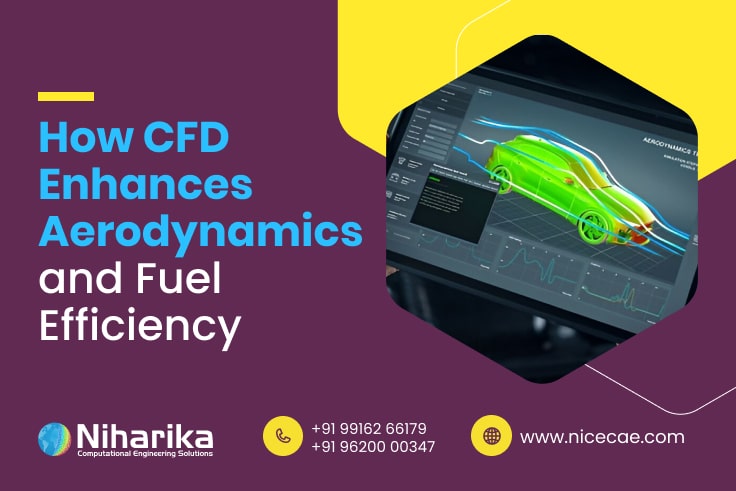
• Automotive aerodynamics optimization
AI‑assisted CFD tunes car shapes, wings, and airflow zones. It speeds testing and narrows design options.
• HVAC system design automation
Heating and cooling ducts, vents, and fan placement benefit. AI speeds the design of HVAC systems and ensures comfort.
• Turbomachinery performance prediction
Blade flow, stall prediction, tip leakage zones come into focus faster. AI models predict turbomachinery response under loads.
• Heat exchanger efficiency analysis
AI finds optimal fin spacing, core geometry, and pattern. CFD then simulates validated designs more efficiently.
Challenges and Limitations
AI/ML adds value, but some hurdles remain. We look at the key constraints.
• Initial AI model training requirements - Training models need many cases. That requires time and compute upfront.
• Need for quality historical data - Bad or incomplete past data hurts model accuracy. Firms must maintain clean records.
• Integration with existing CFD software - Legacy tools may not support AI plug‑ins. Integration requires effort and testing.
• Validation and verification concerns - Automated setups must still be verified. Engineers must ensure AI results are valid before delivery.
Future of AI‑Powered CFD Services
Looking ahead, AI and ML will bring new capabilities to CFD services in engineering.
• Fully automated CFD workflows
End‑to‑end pipelines could run from geometry import to result report with minimal supervision.
• Real‑time design optimization
Now at simulation time, AI will suggest design tweaks instantly and compare alternatives mid‑run.
• Integration with IoT and digital twins
Sensors and twins feed live data into AI/CFD models. Simulations reflect current states and guide real operation.
• Predictive maintenance applications
AI‑CFD can predict when parts overheat or fail. This supports maintenance planning and prevents downtime.
Understand why CFD analysis services are essential in modern manufacturing.
AI and machine learning bring speed, consistency, and insight to CFD analysis. Firms that adopt these tools serve clients faster, with fewer errors, and scalable output. Investing in AI/ML for CFD is vital for any competitive CFD service provider in India or worldwide.
If you deliver data center cooling analysis services or CFD analysis, now is the time to embrace AI‑powered workflows. Start small, build capability, and offer smarter, faster, and more accurate CFD to your clients.
.jpg)
 (1).jpg)
 (1).jpg)
 (1) (1).jpg)
 (3).jpg)

.jpg)
.jpg)
.jpg)
.jpg)

.jpg)
.jpg)
.jpg)
.jpg)
.jpg)
.jpg)
.jpg)
(1).jpg)
(1).jpg)
.jpg)
.jpg)
.jpg)


.jpg)



.jpg)


.jpg)