
.jpg)
Every photo uploaded, video streamed, and AI model trained relies on massive data centers working silently in the background. These facilities store and process enormous volumes of information every second. But behind this digital convenience lies a growing thermal challenge.
Hyperscale data centers are expanding rapidly to support artificial intelligence, machine learning, and high-performance computing. Each new generation of processors packs more power into smaller spaces. As rack density increases, the amount of heat produced inside server halls rises sharply.
Traditional cooling systems were not designed for these conditions. Air conditioning units that once handled moderate loads now struggle to maintain stable temperatures. What worked for earlier facilities often fails in modern hyperscale environments.
Most operators rely on temperature sensors and HVAC monitoring to maintain cooling performance. While useful, these systems only show average readings across large areas.
They rarely reveal small thermal pockets forming between racks, under raised floors, or inside airflow pathways. These microclimates can reach dangerous temperatures long before alarms trigger. By the time the problem becomes visible, the equipment may already be under stress.
Data center operators are shifting their focus. Instead of reacting to heat problems after they appear, they now aim to predict them before equipment is installed or upgraded.
This is where advanced simulation becomes essential. With the help of CFD consulting services, engineers can analyze airflow and thermal behavior in a virtual environment before problems reach the server floor.
The result is a move from reactive cooling to predictive thermal management.
The Mechanics of a Cooling Crisis
Data center cooling problems rarely begin with obvious failures. Most issues start with small airflow imbalances that slowly grow into major operational risks. Understanding these mechanisms helps explain why traditional monitoring often falls short
Inside a data center, cooling depends on carefully controlled airflow. Cold air must reach server inlets, absorb heat from equipment, and exit the room efficiently. When this balance breaks down, heat begins to accumulate in unexpected areas.
High-Density Challenges
Modern hyperscale facilities can host racks exceeding 30–80 kW of power load. These racks release intense heat within compact footprints.
Such concentrated heat creates what engineers call thermal dead zones. These are areas where air circulation slows down or stops entirely.
When airflow stagnates, heat remains trapped around equipment. Servers located in these pockets experience higher inlet temperatures than surrounding racks. Even a small difference in temperature can shorten hardware lifespan.
Inefficient Airflow
Cooling problems are often caused by airflow mismanagement rather than insufficient cooling capacity. Two common issues appear in many data centers:
Bypass air occurs when cooled air returns to cooling units without passing through servers.
Recirculation happens when hot exhaust air loops back into server intakes.
Both conditions reduce cooling efficiency. Instead of removing heat effectively, the system continuously mixes hot and cold air.
Over time, this thermal imbalance stresses processors, memory modules, and power supplies.
Energy Waste
When hotspots appear, operators often increase cooling output across the entire facility.
This approach lowers overall temperatures but wastes enormous amounts of energy. In many cases, large sections of the data center become over-cooled simply to protect a few problematic racks.
Energy costs rise. Cooling infrastructure works harder than necessary. Yet localized hotspots may persist. This is why understanding airflow behavior at a detailed level is critical.
Understanding computational engineering solutions for fatigue and durability analysis.
How CFD Analysis Services Act as a Preventive Shield
Thermal problems are difficult to diagnose through sensors alone. Airflow moves in complex patterns that change with rack placement, equipment density, and cooling configuration.
Simulation provides a way to study these interactions before they become operational risks. Computational modeling allows engineers to recreate the thermal environment of a data center in a digital space.
By analyzing airflow and temperature distribution in detail, engineers can identify issues long before hardware experiences stress. This is where CFD analysis services become essential for modern facilities.
The Virtual Twin
Using Computational Fluid Dynamics, engineers create a digital twin of the data center. This model includes:
Server racks
Cooling units
Raised floors
Containment systems
Cable trays and obstructions
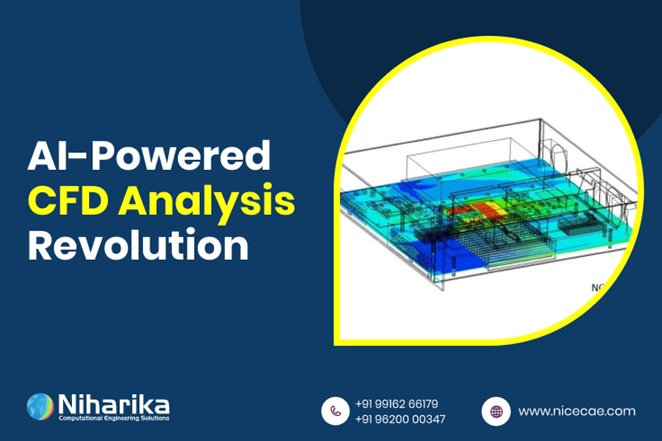
The simulation calculates how air moves through every pathway. It predicts temperature changes at thousands of points within the room. The result is a highly detailed representation of the facility thermal behavior.
Visualizing the Invisible
Airflow cannot be seen with the naked eye. But CFD simulations convert these patterns into clear visual maps. Engineers can identify:
Hotspots between racks
Airflow blockages
Pressure drops under raised floors
Temperature gradients across aisles
These insights help engineers fix design problems before construction or upgrades begin. Many companies now rely on CFD consulting services to ensure cooling systems are designed correctly from the start.
Scenario Testing
One of the strongest advantages of simulation is the ability to test different scenarios safely. For example, engineers can simulate -
Failure of a CRAC (Computer Room Air Conditioner) unit
Addition of high-density AI racks
Rearrangement of server rows
Changes in airflow containment
The model shows how temperatures will change and how long equipment can operate safely during failures. These insights help operators prepare for real-world disruptions.
5 critical CFD parameters every data center manager should monitor.
Key Benefits of Implementing CFD for Hyperscale Facilities
Simulation does more than detect cooling problems. It provides practical guidance that improves both reliability and efficiency. When thermal behavior is understood clearly, data center design decisions become more precise.
Cooling systems operate more efficiently, equipment remains protected, and expansion becomes easier to manage. This is why many hyperscale operators rely on CFD analysis services during both design and operational stages.
Optimized PUE (Power Usage Effectiveness)
Power Usage Effectiveness, or PUE, is one of the most important metrics in data center efficiency.
Poor airflow design often leads to unnecessary cooling loads. Facilities consume more electricity than required to maintain safe temperatures.
CFD studies reveal exactly where cooling is needed and where it is being wasted.
By adjusting airflow paths, containment systems, and cooling unit placement, operators can reduce energy consumption while maintaining safe operating conditions.
Informed Capacity Planning
Hyperscale data centers rarely remain static. New servers, storage systems, and AI clusters are constantly added. Without proper analysis, these upgrades can disrupt airflow balance.
Simulation allows engineers to evaluate how new racks will affect temperature distribution before installation. This ensures new infrastructure can be integrated safely without harming existing equipment.
Hardware Longevity
Electronic components are highly sensitive to sustained heat exposure. Even small temperature increases accelerate component aging. Over time, this leads to unexpected hardware failures and higher maintenance costs.
CFD modeling identifies subtle heat stress conditions that may not trigger alarms but still affect equipment reliability. Correcting these issues early protects servers and extends their operational life.
Get in Touch with Us for CFD Analysis Services
You cannot manage what you cannot see. Airflow patterns inside data centers are complex and often invisible to standard monitoring tools.
CFD modeling reveals these hidden thermal behaviors. It allows engineers to predict hotspots, optimize airflow, and prevent failures before equipment is even installed.
Cooling strategies are changing. The goal is no longer just to keep server rooms cold. Modern thermal management focuses on reliability, efficiency, and operational resilience. Facilities must maintain stable temperatures even as workloads grow and infrastructure evolves.
Protect your infrastructure from thermal failure. Contact NiceCAE today for expert CFD analysis services and ensure your data center cooling system operates safely, efficiently, and reliably.
 (1).jpg)
 (1).jpg)
 (1) (1).jpg)
 (3).jpg)

.jpg)
.jpg)
.jpg)
.jpg)
.jpg)
.jpg)
.jpg)
.jpg)
.jpg)
.jpg)
.jpg)
(1).jpg)
(1).jpg)
.jpg)
.jpg)
.jpg)


.jpg)


.jpg)


.jpg)