

Fatigue analysis studies how parts crack under repeated stress. Durability analysis checks how long a part lasts in real use. Together, they help engineers design products that don’t fail under cycling loads.
Physical testing takes time and money. It often only covers limited conditions. Modern designs face complex loads, new materials, and tighter safety standards. Testing alone can’t cover all of that.
A computational engineering solution uses simulation to predict fatigue early. It speeds up design iterations and cuts costs by reducing prototypes. It also adds confidence to safety and reliability.
Key Challenges in Fatigue and Durability Analysis
Failure often comes from repeated loads. Predicting fatigue life is hard. And engineers face the real constraints.
• Complex loading conditions and multi-axial stress states
Real parts often see loads from many angles which creates multi‑axis stress states. Physical tests struggle to mimic this accurately.
• Time and cost constraints of physical testing
Real-world tests take months. Each cycle test rig and sample costs money. It slows product schedules.
• Predicting long‑term performance from short‑term data
Tests might run for thousands of cycles. But real life spans millions. Extrapolation from short test data adds uncertainty.
• Material behavior under cyclic loading
Different materials, including metals or composites, respond differently to repeated stress. As behavior changes over time, modeling is not simple at all.
Computational Engineering Approaches
Engineers turn to computation to predict fatigue. Simulations mimic real loads on digital models. And this yields insight faster.
Finite Element Analysis (FEA)
• Stress concentration identification - FEA shows where stresses peak, like at holes or sharp edges. It maps stress concentration zones precisely.
• Hot spot analysis for crack initiation prediction - Hot spots are where cracks begin. FEA highlights these. Engineers can redesign early.
Advanced Simulation Methods
• Multi‑body dynamics integration - Simulations can include connected moving parts. This shows real interactions under cycling loads.
• Frequency domain analysis - Engineers study vibration and resonance. Frequency domain tools reveal likely fatigue frequencies.
• Time domain simulation for variable amplitude loading - Real loads vary over time. Time domain simulation models that sequence directly. It captures realistic damage effects.
Material Models
• S‑N curve implementation - S‑N curves plot stress vs. cycles to failure. Simulations apply these curves to real materials.
• Damage accumulation theories (Palmgren‑Miner rule) - Miner’s rule sums damage from each stress cycle. It predicts when failure may occur.
• Advanced material models for composites and metals - Modern materials behave in complex ways under cyclic load. Advanced models account for micro‑cracks, delamination, and plasticity.
Industry Applications
Computational fatigue tools reach across many industries. They solve real problems where safety matters.
• Automotive: Engine components, chassis, suspension systems
Car parts like suspension arms see repeated dynamic loads. Simulation helps prevent failure. It supports light‑weighting.
• Aerospace: Aircraft structures, landing gear, turbine blades
Aircraft parts endure thousands of take‑off, landing, and flight cycles. Simulations predict fatigue in wings, blades, and structures, with high precision.
• Energy: Wind turbine components, offshore structures
Wind turbines face cyclic wind loads and wave forces. Simulations predict blade and tower durability over years.
• Heavy machinery: Construction equipment, mining machinery
Excavators, crushers, and heavy gear endure heavy cycles under harsh conditions. Computational fatigue checks help prevent downtime and failure.
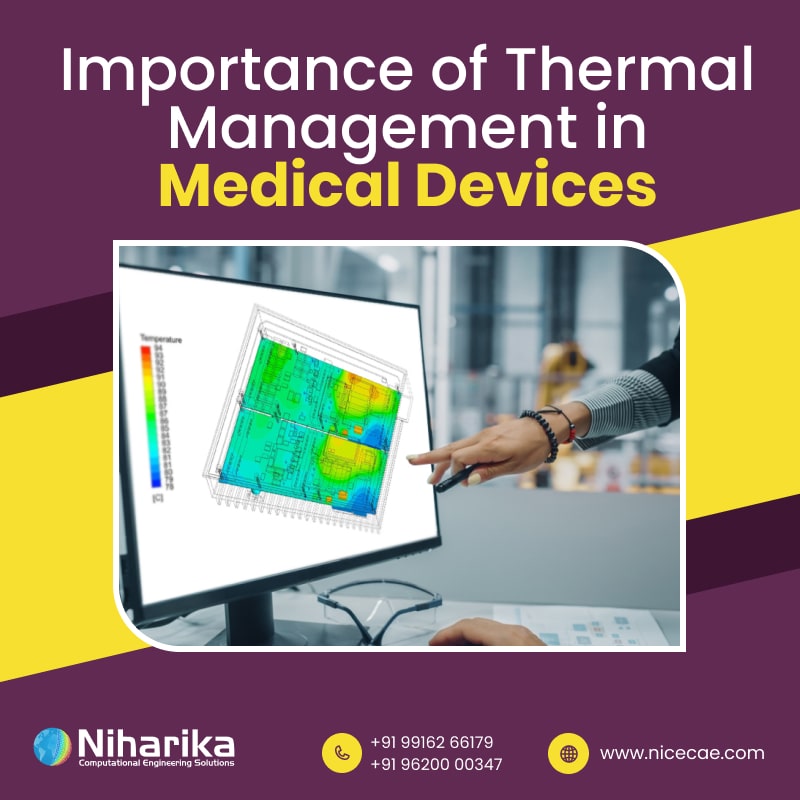
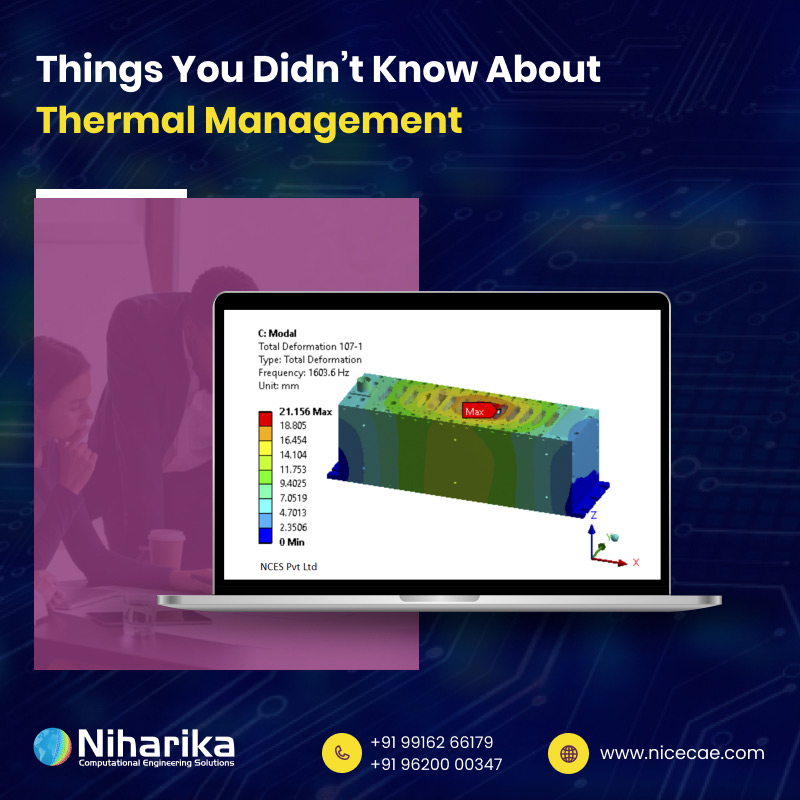
Explore thermal management as the silent hero of high performance electronics.
Software Tools and Technologies
Modern tools offer ready fatigue modules. They integrate with CAD and help in automating workflows. And this in turn, makes it easy to visualize.
• Leading CAE software platforms
Popular tools include ANSYS, nCode DesignLife, FEMFAT, and Optistruct. They support computational engineering solutions for fatigue analysis.
• Integration with CAD systems
These tools pull geometry directly from CAD. Changes update the simulation. This keeps design and analysis in sync.
• Automated fatigue analysis workflows
Once you define loads and materials, the tool cycles through cases automatically and helps in saving manual effort across multiple designs.
• Post‑processing and visualization capabilities
Tools generate life‑map plots, damage charts, and crack initiation predictions. Results are visual and clear for engineers.
Understand how modern mechanical design services improve product lifestyle and performance.
Benefits of Computational Engineering Solutions
Using simulation brings clear benefits. It touches cost, safety, speed, and quality.
• Reduced physical testing requirements. You can cut down on full-scale endurance tests. Simulations validate designs early.
• Faster design iterations. Digital models update quickly. Engineers can test many variants in days, not weeks.
• Cost savings in product development. Less testing, fewer prototypes, fewer failures in service. This lowers expenses significantly.
• Improved product reliability and safety. Predicting fatigue early means fewer surprises in real use. Products last longer and meet safety targets.
• Virtual validation before prototyping. Before building a single part, simulation confirms the design. This avoids wasted prototypes.
Best Practices and Implementation
A good simulation is not just tool use. It requires skill, care, and process.
• Proper mesh density for fatigue analysis. Mesh must be fine enough around stress raisers. Too coarse mesh hides hot spots.
• Load case definition and validation. Realistic load histories matter. Rain‑flow counting, superposition of cycles, and mean stress effects all require correct setup.
• Result interpretation and safety factors. Results show predicted life. Engineers should apply safety margins. Understand scatter and material spread.
• Integration with design optimization processes. Fatigue results feed into optimization loops. You can adjust geometry automatically to improve durability.
Future Trends
Simulation evolves fast. New tech makes fatigue prediction smarter, faster and more connected.
• AI and machine learning integration. AI tools can learn from past simulations. They flag critical areas faster and suggest design fixes.
• Cloud‑based simulation platforms. Cloud tools let teams run heavy fatigue simulations remotely and scale compute power on demand.
• Real‑time fatigue monitoring. Sensors feed live stress data. Coupled with fatigue models, which enables real‑time life tracking in service.
• Digital twin applications. Digital twins combine measured data and simulation. They predict fatigue in real assets throughout their lifecycle.
A computational engineering solution brings speed, cost-efficiency, and reliability to fatigue and durability analysis. It makes testing smarter, designs stronger, and performance predictable.
Engineering teams in India and beyond should embrace these tools. Start small—use simulation for key high‑risk components. Build skills in fatigue simulation. The payoff in safety and development efficiency is clear. A computational engineering solution is no longer optional but essential.
Get in touch with Niharika Computational Engineering Solutions today for a professional opinion.
.jpg)
 (1).jpg)
 (1).jpg)
 (1) (1).jpg)
 (3).jpg)
.jpg)
.jpg)
.jpg)
.jpg)

.jpg)
.jpg)
.jpg)
.jpg)
.jpg)
.jpg)
.jpg)
(1).jpg)
(1).jpg)
.jpg)
.jpg)
.jpg)


.jpg)


.jpg)


.jpg)