
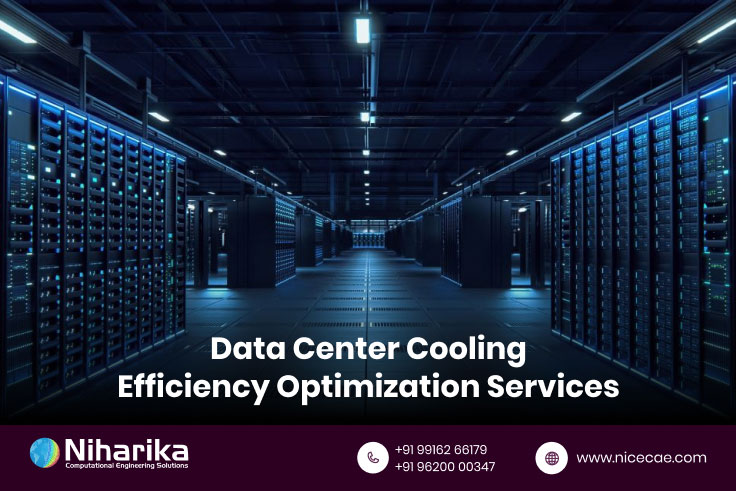
Data centers often spend about 40 % of their energy just on cooling systems which is a huge share. Infrared maps and thermal sensors show that cooling demand drives costs.
Computational Fluid Dynamics, or CFD, gives precise thermal management solutions. With CFD we can model airflow and temperature distribution. To make things easier, we can test design options before building, in the preliminary design stage itself.
In short: CFD transforms cooling efficiency. Read below to understand the value of data center CFD analysis servicesand how they work.
What is CFD Analysis for Data Centers?
CFD stands for Computational Fluid Dynamics. It uses mathematics to simulate fluid flow and heat transfer. In datacenters, CFD models how cool air moves and how heat spreads. It runs simulations on servers and racks. It predicts how different layouts affect temperature distribution.
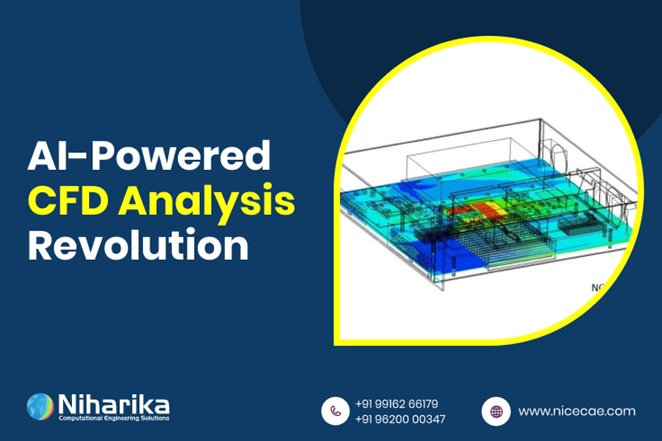
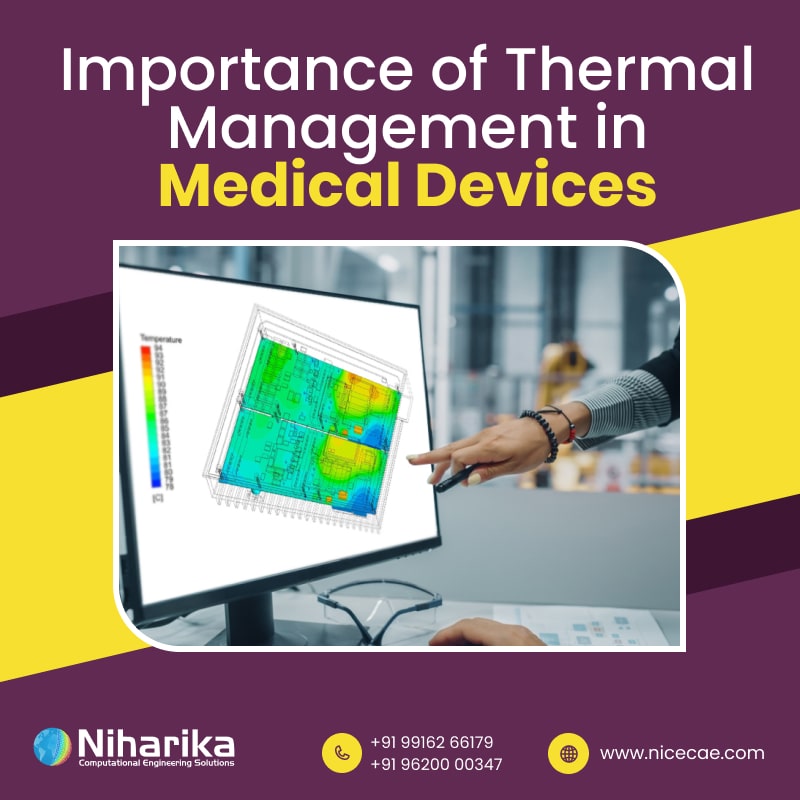
CFD tools generate 3D maps. You will be able to see where air is slow or where hot zones develop. You get a perspective on how heat transfers from servers to the room.
Key parameters of CFD are – tracking of air velocity, temperature gradients, and pressure drops. This helps you in understanding where air stalls or heat builds. Tracking these will help you pick better cooling designs.
Common Cooling Challenges in Data Centers
Data centers face many thermal issues resulting in the wastage of energy and risk failure continually.
• Hot Spots and Uneven Temperature Distribution
Uneven air flow causes hot spots which harms sensitive servers. Some racks run too hot, others too cold. This imbalance shortens equipment life.
• Inadequate Airflow Management
Tile placement, fan layout, and containment shape airflow. Poor setups cause recirculation. This reduces cooling effectiveness.
• Energy Waste from Over Cooling
Facility staff often over cool to avoid risks. This uses more power than needed. It raises electricity bills and PUE (Power Usage Effectiveness).
• Equipment Failure Due to Thermal Stress
Thermal stress shortens hardware life. CPUs, storage, power units fail when heat cycles peak. Servers may even shut down under stress.
Read our case study for CFD analysis of hybrid cooled data center.
How CFD Analysis Addresses These Issues
CFD analysis pinpoints these issues. Then it delivers solutions before build or retrofit. Understand how.
• Identifies Optimal Air Distribution Patterns
CFD shows airflow paths. It finds where air stalls or bypasses racks. Engineers tweak tile placement, fan speeds, aisle containment to guide cool air where needed.
• Locates Hot Spots Before Equipment Installation
Simulations highlight hot zones before installation. Fixing them early avoids retrofits. In the process, you will also save on expensive rearrangements.
• Determines Ideal Server & Equipment Placement
CFD helps plan rack layout. It identifies the best spots for high density servers. It ensures balanced temperature across rows. According to its output, engineers execute equipment placements.
• Optimizes Cooling System Layout and Capacity
CFD guides HVAC sizing and placement. It finds optimal CRAC or CCU unit numbers and simulates failure modes and redundancy. This helps pick layout that meets cooling and reliability goals.
Key Benefits of CFD Analysis Services
Using professional data center CFD analysis services yield clear gains.
• Reduce Cooling Costs
Well run CFD projects often cut cooling energy by 20–30 %. This stems from precise airflow routing and reducing over cooling and leads to lower electricity bills.
• Improved Reliability
By curing hot spots and balancing flow, CFD boosts uptime. You avoid thermal stress and server failure. Equipment stays stable and service stays online.
• Optimize Data Center Layout Before Construction
CFD means better space planning. You gain insights before walls and tiles go in. You avoid trial and error which speeds up build and cuts cost.
• Meet Industry Thermal Management Standards
CFD helps meet industry norms like ASHRAE inlet temperature limits. It ensures thermal design fits SLA and safety thresholds.
Explore CFD analysis of modular data center.
CFD Analysis Process
The CFD process follows clear steps. Each one matters for accuracy.
• 3D Model Creation: Digital Replica of Data Center Layout
First the layout is captured in 3D including racks, tiles, walls, HVAC units, and any containment. This replica with a good quality CFD mesh acts as the simulation domain.
• Simulation Setup: Define Boundary Conditions and Loads
Next the inlet air flow rates are defined. Each heat load per rack is assigned. And outside air temp, pressure and HVAC unit power is set.
• Analysis Execution: Run Thermal and Airflow Simulations
Then the solver is run. It calculates steady state or transient results. Depending on your goal you might do time based or steady results.
• Results Interpretation: Generate Heat Maps and Flow Visualizations
After the run you view the heat maps, velocity contours, and pressure charts. This shows where cooling is weak or strong.
• Recommendations: Provide Actionable Optimization Strategies
Finally, you get a few recommendations. Suggestions might include adding containment, moving racks, changing tiles, tuning CRAC or CCU settings, or adding vents.
Real World Applications
Many data centers have used CFD to solve real problems.
• Server Room Cooling Optimization
• Raised Floor Plenum Analysis
• Containment System Design
• Emergency Cooling Scenarios
Data center CFD analysis is essential today. Cooling is too costly and too critical to guess. CFD delivers precision, insight, and control over thermal systems. It cuts costs, boosts uptime, and supports scaling.
Expert data center CFD analysis services bring experience and best practices. They provide clarity and actionable plans. If you plan a new data center or seek to improve an existing one, consider a CFD consultation.
A professional CFD partner will help you model, test, and refine cooling systems. You gain efficiency, reliability and long term savings. Get in touch with Niharika Computational Engineering Solutions today.
.jpg)
 (1).jpg)
 (1).jpg)
 (1) (1).jpg)
 (3).jpg)

.jpg)
.jpg)
.jpg)
.jpg)
.jpg)
.jpg)
.jpg)
.jpg)
.jpg)
.jpg)
.jpg)
(1).jpg)
(1).jpg)
.jpg)
.jpg)
.jpg)



.jpg)


.jpg)


.jpg)