PROJECT DETAILS
Our client approached us to evaluate and optimize the thermal design of an Automotive Powertrain Controller Unit (PCU), focusing on comparing the cooling performance of sheet metal and die-cast enclosure concepts. Based on dimensional constraints and inputs from the electronics hardware team, we performed detailed Computational Fluid Dynamics (CFD) analysis to assess junction temperatures for the specified heat dissipation levels. The study considered component-level heat dissipation, thermal contact resistance, material properties, and uncertainties in the available design inputs. Based on the simulation results, we provided engineering recommendations to help the client identify the enclosure configuration offering better cooling performance within the specified dimensional constraints. The comparative analysis and findings were subsequently presented to the Japanese end user to support informed design decisions and improve the thermal reliability of the PCU.
CFD analysis results
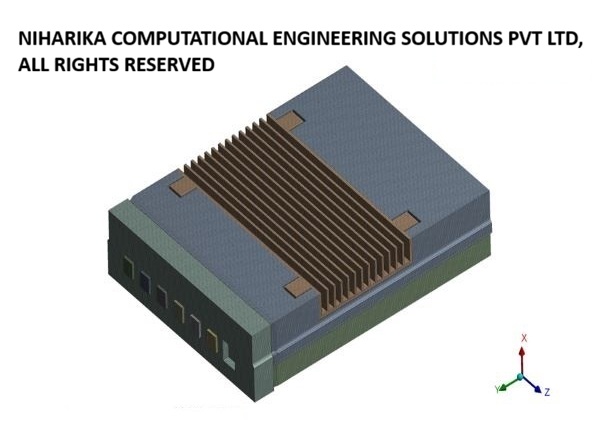
The CFD model consists of approximately 12 million poly-hexcore mesh elements, with appropriate mesh quality metrics maintained in accordance with CFD best practices to ensure reliable and accurate simulation results. Component specification sheets are thoroughly reviewed to understand the thermal characteristics and resistance values of individual electronic components and their interfaces, as these parameters play a crucial role in accurately predicting heat transfer and junction temperatures. CFD simulations are performed under various ambient temperature conditions specified by the client, including the worst-case heat dissipation scenario, to evaluate the thermal performance of the Automotive Powertrain Controller Unit (PCU) under demanding operating conditions. The simulation results are used to identify critical thermal regions and assess the junction temperatures of individual electronic components. Based on the analysis findings, minor modifications are introduced to the enclosure design to enhance heat transfer and improve overall thermal performance. The revised design is evaluated through CFD simulations to verify the effectiveness of these modifications in reducing component junction temperatures. The final design recommendations aim to maintain the junction temperatures of individual components within their respective manufacturer-specified maximum allowable limits across the specified operating conditions.
We Got More
Go through All Our Case Studies

CFD analysis of Electronics control box
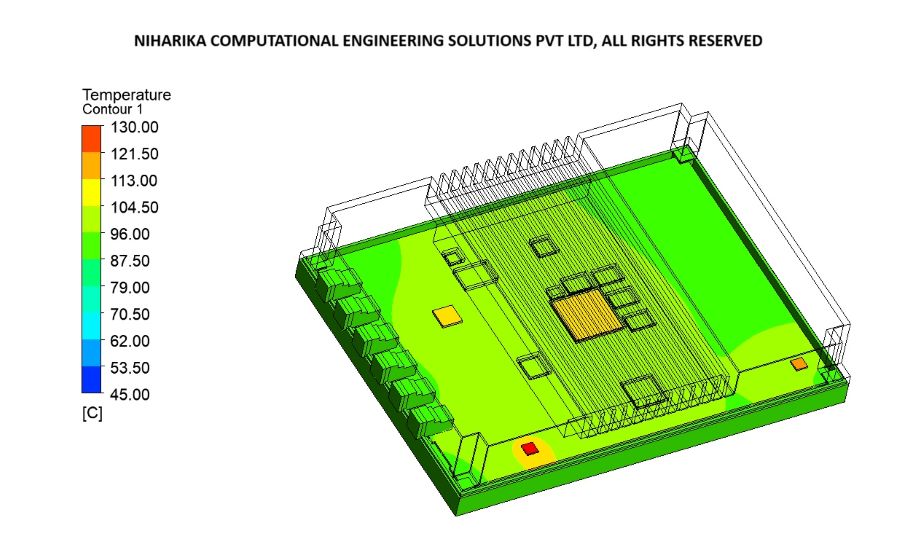
We executed this project for an electronics manufacturer in ISRAEL. The client has approached us with the initial thermal design. We performed a Computational Fluid Dynamics simulation (CFD analysis) and identified the thermal hot spots. We modified the heat sink design with our strong domain expertise, provided heat diffusers at critical locations, and finetuned the design from a thermal perspective. We performed thermal analysis for a worst-case scenario, and our engineering practices have enhanced our clients confidence. Read More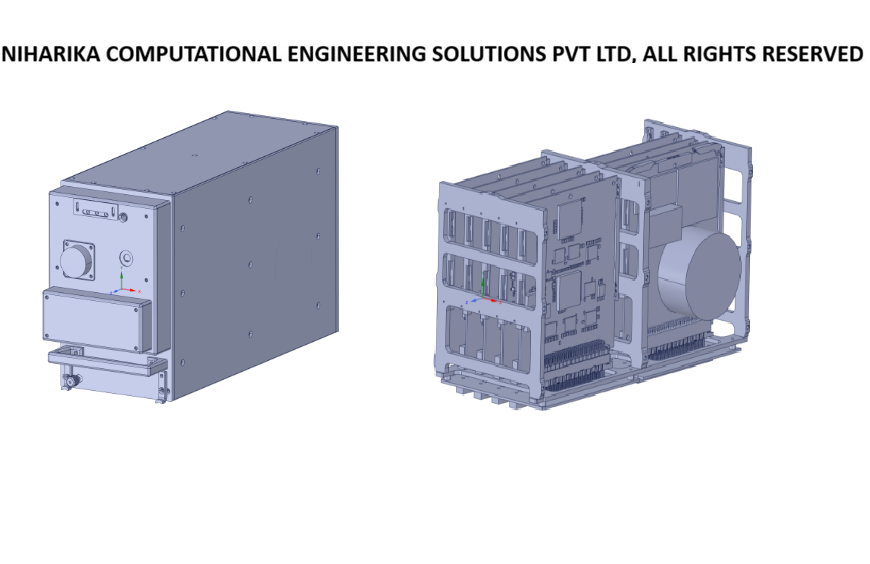
CFD analysis of L Band & S Band Telemetry Power Amplifiers
The L Band & S Band Telemetry Power Amplifier is a passively cooled electronic enclosure in which heat dissipation takes place through natural convection and thermal radiation. The objective of the CFD analysis is to evaluate the thermal performance of the L Band & S Band Telemetry Power Amplifier under extreme ambient temperature conditions of +71°C and −40°C. The analysis aims to assess the temperature distribution within the enclosure and estimate the operating temperatures of critical electronic components to ensure that they remain within their specified thermal limits. Read More
CFD analysis of Multi Band Remote Radio Unit
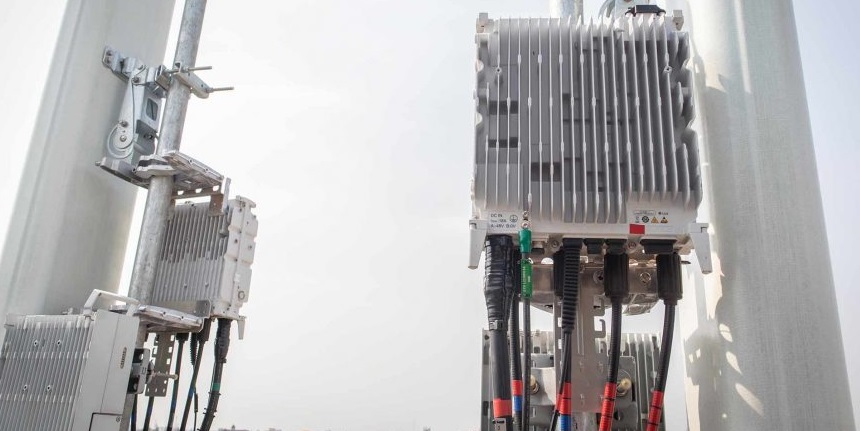
The advent of 5G technology has brought about unprecedented advancements in wireless communications, enabling faster speeds, lower latency, and increased capacity. These advancements are associated with higher power consumption and increased heat generation in the 5G Remote Radio units.Increasing data rates and network densification require radio units to process larger volumes of data, leading to higher power consumption and heat generation. Environmental factors such as ambient temperature, humidity, and exposure to direct sunlight also impact the thermal aspects of the radio units. Read More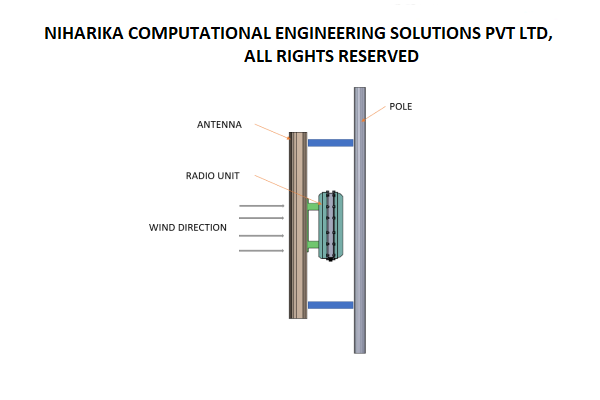
Wind Load analysis for multiband 5G Remote Radio Unit with Antenna using CFD
The seamless operation of base station antennas is of utmost importance for efficient and reliable communication networks. However, these antennas are constantly exposed to various environmental factors that can affect their performance and structural stability. Among these factors, wind load plays a significant role. Read More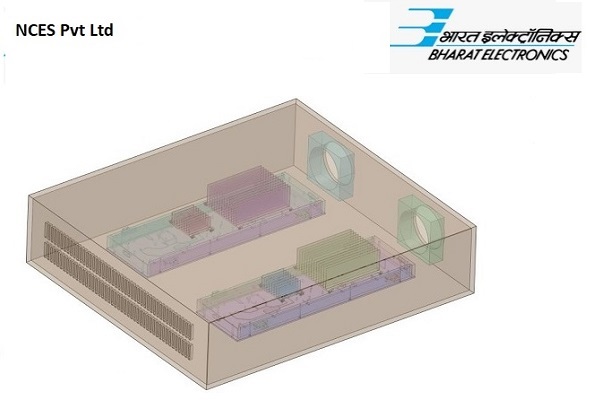
DEVELOPMENT OF COOLING SOLUTION FOR GaN RF POWER AMPLIFIER
The demand for high-power and efficient radio frequency (RF) power amplifiers has been steadily increasing across various industries, including wireless communications, radar systems, and satellite communication. GaN (Gallium Nitride) technology has emerged as a game-changer in RF power amplification due to its exceptional performance characteristics and advantages over traditional technologies. GaN technology offers higher power density, improved efficiency, and wide bandwidth capability, setting it apart from traditional technologies like GaAs (Gallium Arsenide) or SiC (Silicon Carbide). Read More