
PROJECT DETAILS
We executed this project for an electronics manufacturer based in Israel. The client approached us with the initial thermal design of an electronics control box, seeking to evaluate its thermal performance and ensure reliable operation under demanding conditions. Our team performed a comprehensive Computational Fluid Dynamics (CFD) analysis to study airflow patterns, heat dissipation, and temperature distribution within the enclosure. The simulation helped us identify critical thermal hotspots and areas where heat accumulation could affect the performance and reliability of electronic components. Leveraging our domain expertise in electronics cooling, we optimized the heat sink design, incorporated heat diffusers at critical locations, and fine-tuned the overall thermal configuration to improve heat transfer and temperature uniformity. We also conducted thermal analysis under worst-case operating conditions to validate the design's thermal performance and identify potential risks. Through this simulation-driven approach and targeted design improvements, we helped the client achieve a more thermally optimized design, mitigate overheating risks, and enhance confidence in the product's thermal reliability before deployment.

3D CAD MODEL
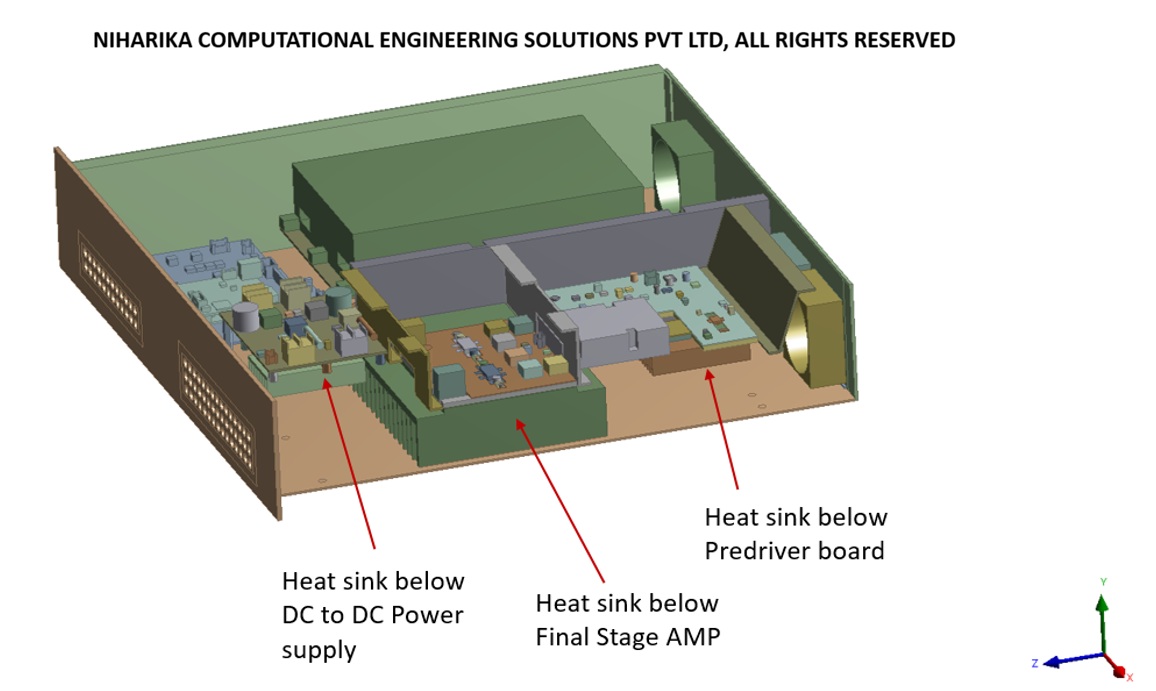
The rack unit comprises five PCB assemblies integrating several major heat-generating components, including hybrid couplers, power amplifiers, DC-to-DC power supplies, and harmonic filters. These components contribute to the overall thermal load of the system, with localized heat generation varying according to their power dissipation and operating conditions. To manage the heat generated by high-power-density components, local heat sinks are incorporated at critical locations to facilitate effective heat transfer. At the overall system level, cooling is achieved through three exhaust fans, supported by a louver arrangement that enables air circulation through the rack enclosure and assists in removing the accumulated heat. The 3D CAD model provided by the client was reviewed and simplified to meet the requirements of CFD analysis. Non-essential geometric details were removed while preserving the key features influencing airflow and heat transfer, including the PCB layouts, major heat-generating components, heat sinks, fan locations, and louver openings. This geometry preparation helped establish a computationally efficient model while retaining the essential characteristics required to evaluate the rack unit's thermal performance.
CFD MESH
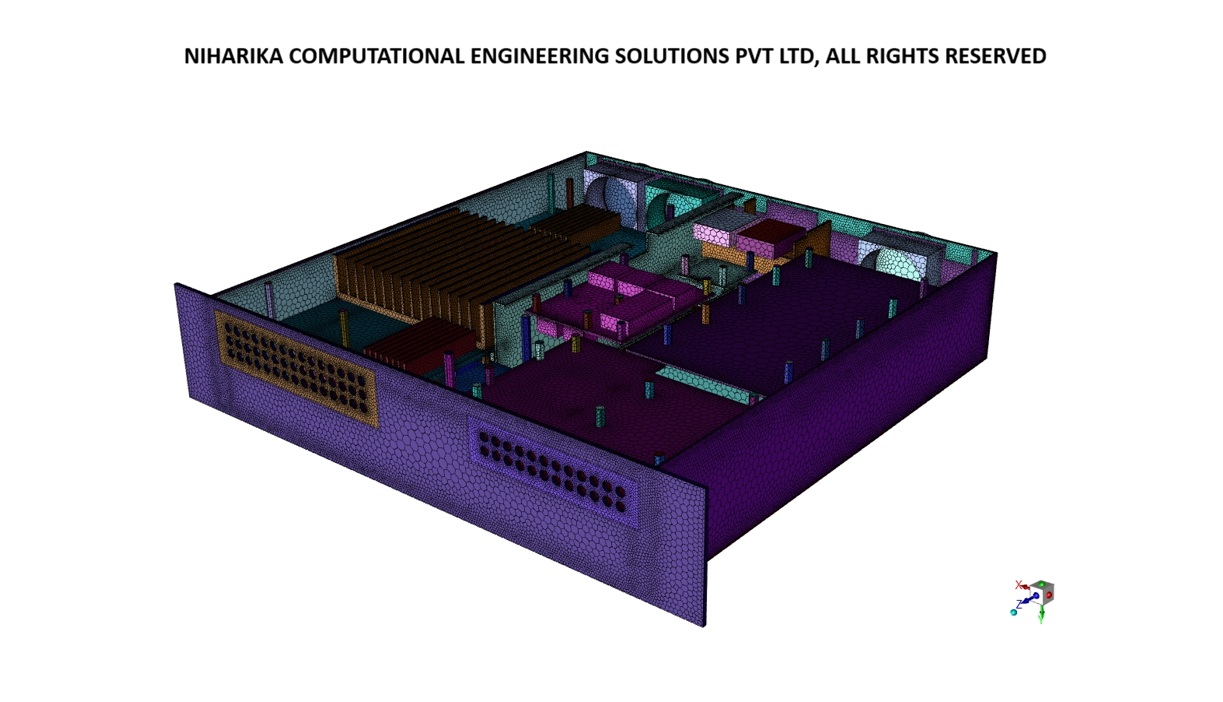
A high-quality poly-hexcore CFD mesh was generated for the simplified 3D CAD model, comprising approximately 20 million computational cells. The mesh was designed to capture the internal geometry of the rack enclosure, PCB assemblies, heat sinks, fan regions, and louver openings, which significantly influence airflow and heat transfer. The poly-hexcore meshing approach provides a balance between computational efficiency and solution accuracy. Local mesh refinement was applied around critical heat-generating components, heat sink fins, and regions with significant airflow variations. The resulting mesh enabled detailed evaluation of airflow patterns, pressure distribution, and temperature variations throughout the rack unit under the specified operating conditions.
CONCLUSIONS DRAWN FROM CFD ANALYSIS RESULTS
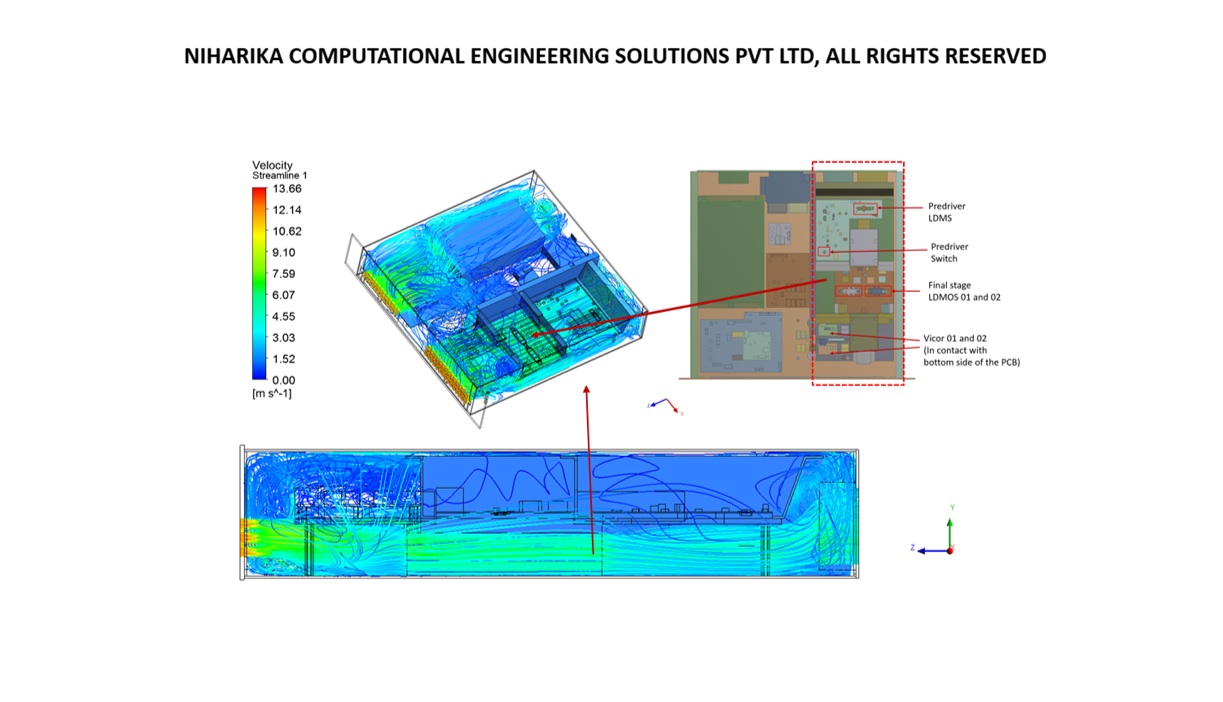
The fan operating point was initially estimated through a series of preliminary CFD iterations to establish a realistic representation of the airflow conditions within the rack enclosure. Key input parameters, including component heat dissipation rates, thermal junction resistances, and other critical thermal boundary conditions, were reviewed and fine-tuned during the simulation process to achieve realistic and reliable results. Post-processing focused on evaluating key thermal and fluid-flow parameters, including airflow distribution, flow development, pressure drop, heat flux contours, and temperature contours. These results provided insights into the system's cooling effectiveness and helped identify potential thermal hotspots and areas for improvement. Based on the simulation results, a few minor design recommendations were proposed to further enhance thermal performance. Following the implementation of these recommendations, the CFD analysis confirmed that the overall thermal design was satisfactory, with all electronic components and the system operating within their respective manufacturers' specified upper temperature limits under the analysed conditions.
We Got More
Go through All Our Case Studies

CFD analysis and thermal optimization for automotive Power train controller unit
Our Client TATA Elxsi has approached us to optimize the thermal design of the Automotive Power train controller unit. The client has come with dimensional constraints and inputs from the Electronics hardware team. We have guided the client starting from conceptual heat sink design, performed Computational Fluid Dynamics (CFD) analysis, fine-tuned the design with the help of CFD analysis results, and finally presented our part of the work to the Japanese end user. We have addressed heat dissipation, thermal contact resistance, and other input data uncertainties. Read More
CFD analysis of Multi Band Remote Radio Unit
The advent of 5G technology has brought about unprecedented advancements in wireless communications, enabling faster speeds, lower latency, and increased capacity. These advancements are associated with higher power consumption and increased heat generation in the 5G Remote Radio units.Increasing data rates and network densification require radio units to process larger volumes of data, leading to higher power consumption and heat generation. Environmental factors such as ambient temperature, humidity, and exposure to direct sunlight also impact the thermal aspects of the radio units. Read More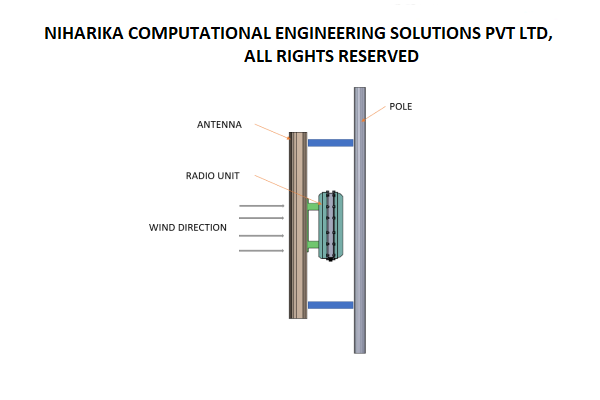
Wind Load analysis for multiband 5G Remote Radio Unit with Antenna using CFD
The seamless operation of base station antennas is of utmost importance for efficient and reliable communication networks. However, these antennas are constantly exposed to various environmental factors that can affect their performance and structural stability. Among these factors, wind load plays a significant role. Read More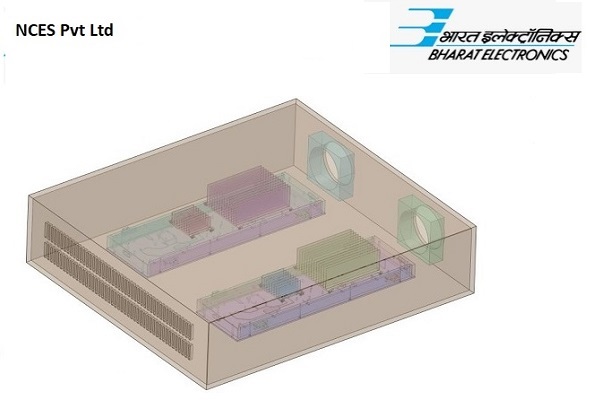
DEVELOPMENT OF COOLING SOLUTION FOR GaN RF POWER AMPLIFIER
The demand for high-power and efficient radio frequency (RF) power amplifiers has been steadily increasing across various industries, including wireless communications, radar systems, and satellite communication. GaN (Gallium Nitride) technology has emerged as a game-changer in RF power amplification due to its exceptional performance characteristics and advantages over traditional technologies. GaN technology offers higher power density, improved efficiency, and wide bandwidth capability, setting it apart from traditional technologies like GaAs (Gallium Arsenide) or SiC (Silicon Carbide). Read More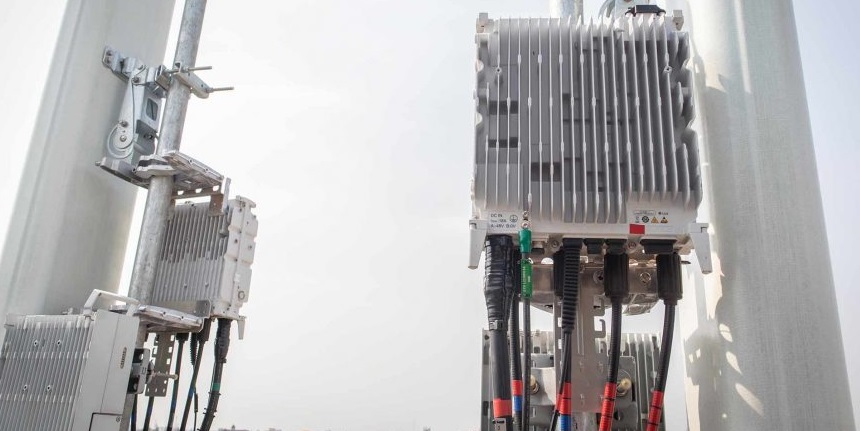
Structural analysis for Triband Radio unit with antenna
In this project, we performed FEM analysis to check strength of the triband antenna model for the given load conditions. FE mesh consists of higher-order Tet elements & Hexahedral elements. Mesh size is 2810173 nodes & 1611495 elements. Appropriate contacts are modeled between all the parts in the assembly. FEM analysis is carried out as per the load conditions provided by the customer. We carried out Modal Analysis, Sine sweep Analysis (Harmonic Analysis), Random Vibration Analysis, Shock Analysis, Seismic Analysis, and Wind load Analysis. Read More