
CLOSED LOOP ANAESTHESIA DELIVERY SYSTEM : AN OVER VIEW
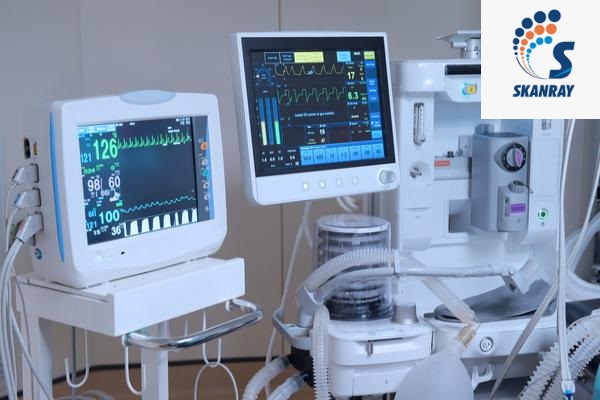
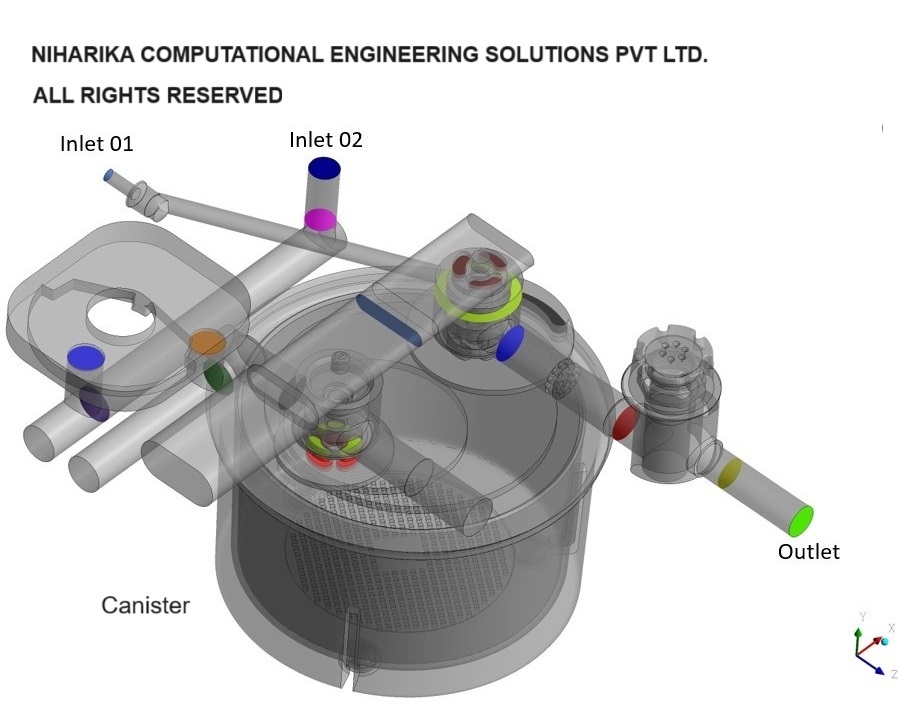
Closed loop anesthesia delivery systems are specifically engineered to automate and enhance the administration of anesthesia throughout surgical procedures. By constantly monitoring crucial indicators like oxygen levels and breathing patterns, these systems intelligently adapt the anesthesia dosage to ensure the patient receives the precise amount required at any given moment. This not only enhances the overall efficiency of the procedure but also significantly improves its safety. The inclusion of a canister in the system enables the gathering and confinement of exhaled gases, thereby preventing their emission into the surroundings. Through proficiently capturing and reusing these gases, the canister improves the effectiveness and accuracy of the anesthesia administration procedure. Flow valves play a crucial role in anesthesia delivery systems as they are responsible for maintaining accurate and consistent levels of anesthesia. These valves allow for the regulation of gas flow rates and pressure in closed loop anesthesia systems, which is essential for delivering the desired concentration of anesthesia to the patient. Through the adjustment of flow rates and pressure, an anesthesiologist can personalize the anesthesia delivery to meet the specific requirements of each patient, ensuring optimal sedation throughout the procedure.
REGULATORY COMPLIANCE
Regulatory compliance is essential in the design and development of closed-loop anesthesia delivery systems, as it helps ensure patient safety, reliable device performance, and adherence to applicable medical-device standards. Compliance with prescribed requirements minimizes potential risks associated with excessive flow resistance and pressure losses, thereby supporting safe and effective anesthesia delivery. In this context, the permissible pressure loss across the system is approximately 4 cm H₂O (392 Pa). Meeting this stringent requirement necessitates careful optimization of the internal flow passages and components, supported by accurate CFD simulations and experimental validation to verify that the system performs within the specified limits under relevant operating conditions.
CHALLENGES IN CONDUCTING CFD ANALYSIS
The intricate geometry of the canister, flow-control components, and regulating valves makes accurate CFD analysis challenging, particularly due to the stringent regulatory limits on permissible pressure losses. Since even minor numerical approximations can significantly affect the predicted pressure drop, meticulous attention is required throughout the CFD process, including CAD cleanup, mesh generation and distribution, boundary-layer resolution, grid-independence studies, and solution convergence. Appropriate boundary conditions and numerical models must be selected to ensure reliable predictions. Furthermore, the CFD results must be validated against experimentally measured data under comparable operating conditions to establish confidence in the simulation methodology and ensure accurate assessment of the system's pressure-loss performance.
CFD ANALYSIS : SCOPE OF THE WORK
Our valued client, SkanRay Healthcare Technologies, a leading global medical device OEM, entrusted us with conducting a comprehensive CFD analysis of the existing prototype of the Closed-Loop Anesthesia Delivery System (CLADS). The primary objective was to evaluate the internal flow characteristics and pressure losses and validate the numerical predictions against experimentally measured data to establish the reliability and accuracy of the CFD methodology. Upon successful validation, the established simulation approach would be applied to prototypes incorporating the proposed design modifications to assess their impact on flow performance and pressure losses. This iterative approach enables data-driven design optimization and supports the development of a system that meets the specified pressure-loss requirements while maintaining the desired flow performance.
CFD MESH GENERATION
The 3D CAD model of the Closed-Loop Anesthesia Delivery System (CLADS) was discretized using a hybrid mesh to accurately capture the complex internal geometry and flow characteristics. Particular attention was given to refining the mesh in the boundary-layer regions near the walls and internal components to resolve steep velocity gradients and improve the prediction of pressure losses. The computational mesh consisted of approximately 28 million elements, with mesh quality carefully assessed to ensure numerical accuracy and stability. Grid-independence studies were performed to evaluate the sensitivity of the simulation results to mesh refinement and determine an appropriate mesh resolution. The resulting mesh provides adequate spatial resolution to capture the essential flow features, supports stable and smooth convergence, and enhances the reliability of the predicted pressure-drop results.
FLOW MODELLING
The flow within the Closed-Loop Anesthesia Delivery System (CLADS) was modelled as three-dimensional, steady-state, compressible, viscous, and turbulent to capture the complex flow behaviour and associated pressure losses across the internal components. The k-omega SST turbulence model was employed to accurately predict turbulence characteristics, flow separation, and near-wall flow behaviour. A y plus value of approximately 0.8 was maintained to ensure adequate near-wall resolution and accurately capture boundary-layer effects. This modelling approach enables a detailed assessment of velocity distribution, pressure variations, and localized flow losses, thereby supporting reliable prediction of the overall pressure-drop characteristics of the system.
CFD ANALYSIS RESULTS
Our team demonstrated strong technical expertise and adaptability by collaborating closely with Skanray Technologies’ R&D team throughout the CFD analysis and validation process. Through systematic evaluation and iterative refinement of the simulation model, excellent correlation was achieved between the CFD predictions and experimentally measured results, establishing confidence in the accuracy and reliability of the adopted methodology. The validated CFD process was subsequently applied to prototypes incorporating further design modifications, enabling consistent evaluation of flow characteristics and pressure losses. This approach facilitated design optimization, reduced reliance on repeated physical prototyping, and supported the development of a Closed-Loop Anesthesia Delivery System that meets the specified pressure-loss requirements.
We Got More
Go through All Our Case Studies
Thermal analysis of high voltage X-ray tank assembly
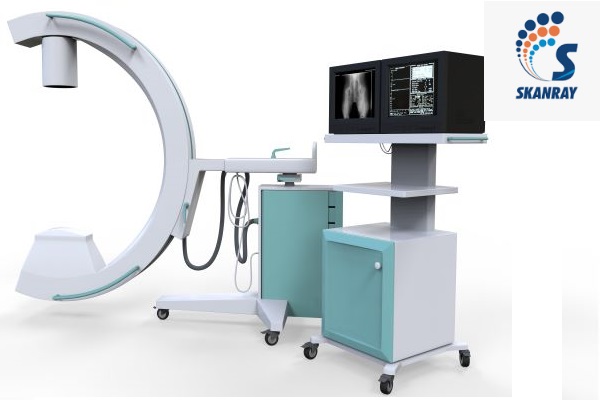
The client is a global medical device OEM, one of the fastest growing in this segment. The client has approached us with the existing design of the high-voltage X ray tank unit. The client is interested in understanding the heat transfer phenomena for the complete system, which enables him to make conscious engineering decisions to enhance the performance of the device. Our CFD model is validated with the experimental results. CFD model is finetuned in all possible aspects, and we ensured that it represents the actual physical phenomena. All the heat transfer paths are analyzed, and the heat balance sheet has enabled our client to take well-informed engineering designs. Read More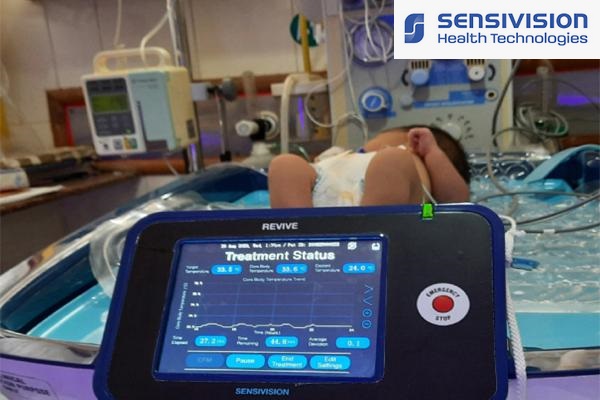
Computational fluid dynamics analysis of neonatal body temperature controller unit
The Neonatal body temperature controller, an initiative by the Government of India, aims to protect newborn babies from Hypoxic ischemic encephalopathy. Our client is working with the Government of India and the Government of Karnataka state to develop this technology for usage in Primary Health care Centers in rural and remote areas. Read More
CFD analysis for General Electric data center,Bihar,India
Computational Fluid Dynamics (CFD) analysis is extensively used in data center projects to study the flow development and temperature field and identify the thermal hot spots in the projects design stage. CFD analysis results enable the thermal designer to make well-informed decisions in the design stage and eliminate all the uncertainties that may affect the electronic equipment mounted in the racks. We carried out CFD analysis for the large data center under construction in the Bihar state of India by Shapoorji and Pallonji EPC company, one of the largest EPC Companies in India. Our CFD analysis results have enabled our customers to optimize the air-cooling system and ultimately to realize an efficient, safer, and effective data center cooling mechanism. Read More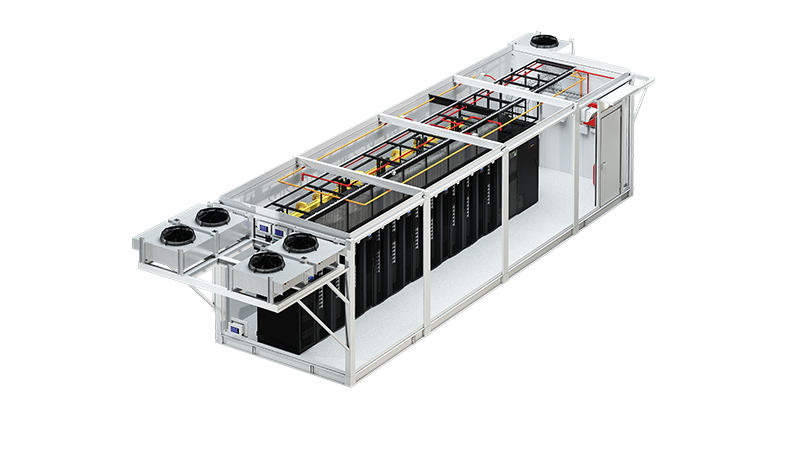
CFD analysis of Modular Data Center
Prefabricated modular data centers, often referred to as integrated modular solutions or containerized data centers, are designed to cater to specific business needs, providing a tailored and secure infrastructure that differs from conventional brick-and-mortar designs. Read More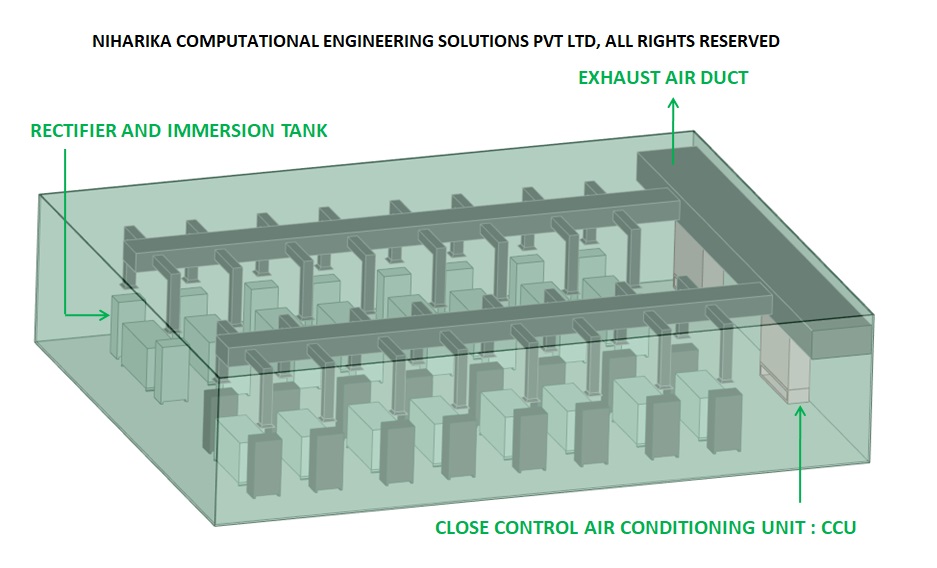
CFD analysis of Hybrid Cooled Data Center
Advanced AI and machine learning workloads are causing powerful GPUs to produce unprecedented heat levels in conventional server settings. Hybrid cooling solutions enable data center operators to manage these elevated temperatures without the need for complete retrofitting of current facilities, facilitating a gradual and cost-efficient method for incorporating liquid cooling tailored to specific high-heat applications. Read More