Recuperative Thermal Oxidiser : Exceptional emission control with enhcanced energy efficiency
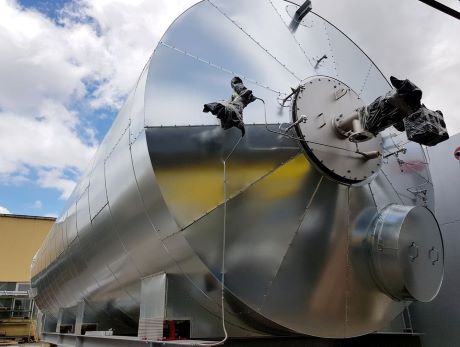
The recuperative thermal oxidizer offers exceptional emission control while enhancing energy efficiency. This state-of-the-art system employs a heat exchanger to capture and recycle heat generated during the oxidation process, leading to a notable decrease in fuel usage and operational expenses. Perfect for numerous industrial applications, the recuperative thermal oxidizer guarantees adherence to strict environmental standards while providing dependable performance. Recuperative thermal oxidizers offer significant advantages in industrial applications by efficiently reducing volatile organic compounds (VOCs) and other harmful emissions. These systems utilize heat recovery mechanisms to capture and reuse thermal energy generated during the oxidation process, leading to lower operational costs and enhanced energy efficiency. By minimizing waste and promoting sustainability, recuperative thermal oxidizers not only comply with environmental regulations but also contribute to a cleaner atmosphere. Their ability to operate at high temperatures ensures effective destruction of pollutants, making them a reliable choice for industries aiming to improve their environmental footprint while maintaining productivity.
Benefits of CFD analysis for Recuperative Thermal Oxidizer (RTO)
CFD analysis offers significant advantages for the design and optimization of recuperative thermal oxidizers. By simulating fluid dynamics and heat transfer processes, CFD enables engineers to visualize airflow patterns, temperature distributions, and combustion efficiency within the system. This detailed insight allows for the identification of potential issues, such as hotspots or uneven flow, which can be addressed early in the design phase. Additionally, CFD can help in optimizing the configuration of heat exchangers, leading to improved energy recovery and reduced operational costs. Ultimately, the application of CFD in this context enhances the overall performance and reliability of recuperative thermal oxidizers, ensuring compliance with environmental regulations while maximizing efficiency.
CAD Model Simplified for CFD analysis and CFD mesh generation
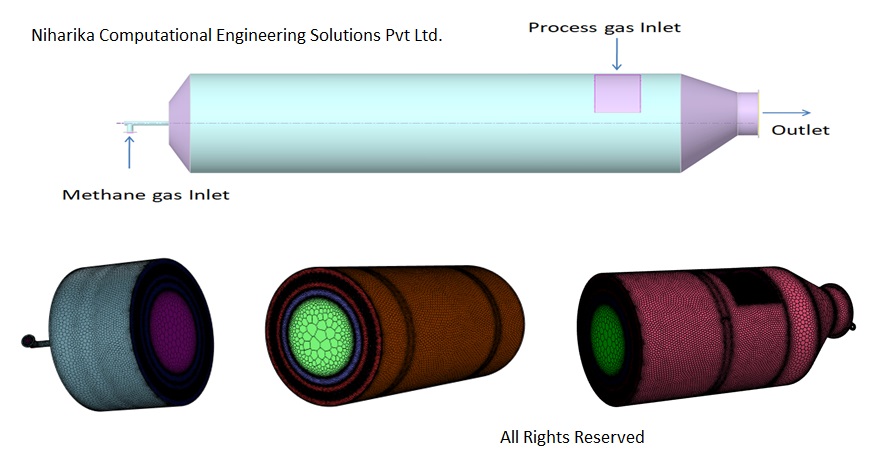
The 3D CAD model provided by the client has been simplified in accordance with the requirements of Computational Fluid Dynamics (CFD) analysis. The simplification process involves removing non-essential geometric details while retaining the critical features that influence the flow behaviour, heat transfer, and combustion characteristics within the system. This approach helps reduce computational complexity without compromising the fundamental physics of the problem. A Poly-Hexcore CFD mesh has been generated for the simplified geometry, comprising approximately 15 million cells. This mesh configuration provides a suitable balance between computational efficiency and the accurate resolution of flow and temperature gradients across critical regions of the domain. The mesh quality metrics have been thoroughly evaluated against established CFD best practices to ensure numerical stability, solution convergence, and reliable prediction of the system's thermal and flow characteristics.
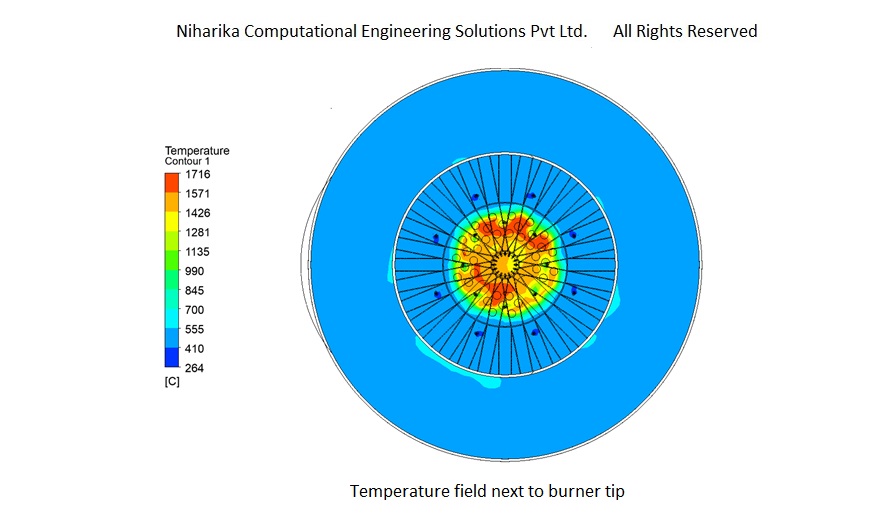
Temperature field adjacent to burner tip
The operating temperature of thermal oxidizers should be sufficiently high to initiate and sustain the oxidation of organic constituents, particularly volatile organic compounds (VOCs), present in the waste gas stream. The maximum operating temperature of the combustor is generally maintained within the range of 700°C to 1200°C, depending on the composition of the waste stream, the nature of the organic compounds, and the required destruction efficiency. To evaluate the thermal performance of the combustor, the temperature profile is analysed at multiple cross-sectional planes along the flow path, starting from the burner tip and extending through the combustion chamber to the oxidation zone. This analysis helps identify temperature variations, potential cold spots, and regions of excessive heating within the combustor. A uniform temperature distribution in the oxidation zone is particularly desirable, as it ensures that the VOCs are exposed to adequate thermal conditions for a sufficient residence time, thereby promoting complete oxidation and achieving the desired VOC destruction efficiency.
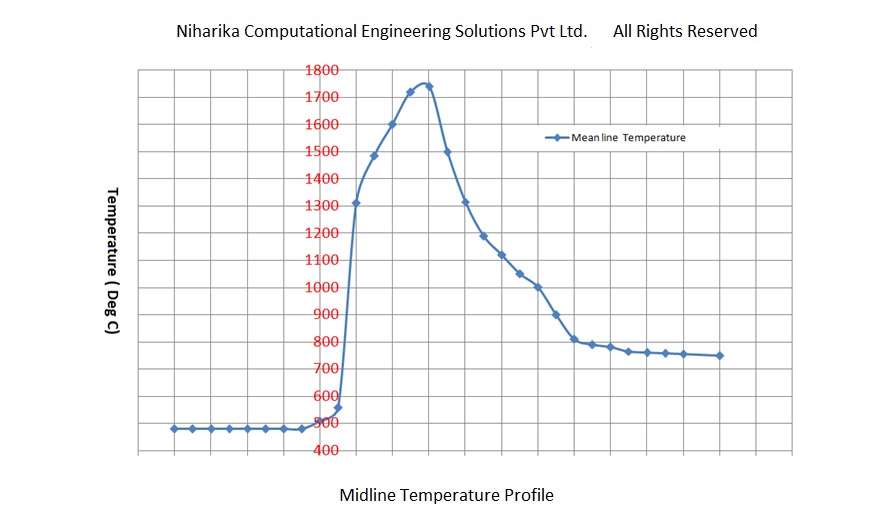
Centreline Temperature distribution
The centreline temperature distribution across the regions upstream and downstream of the burner is plotted in the presented figure. The temperature profile illustrates the variation in temperature along the combustor centreline, from the burner region to the oxidation zone. It is observed that the temperature remains nearly constant within the oxidation zone, indicating a relatively stable thermal environment and uniform heat distribution in this region. Maintaining a consistent temperature in the oxidation zone is beneficial for the effective oxidation of VOCs, as it helps ensure that the organic constituents are exposed to the required thermal conditions for sufficient residence time. This contributes to improved VOC destruction efficiency, stable operation, and optimum thermal performance of the Recuperative Thermal Oxidizer (RTO).
We Got More
Go through All Our Case Studies
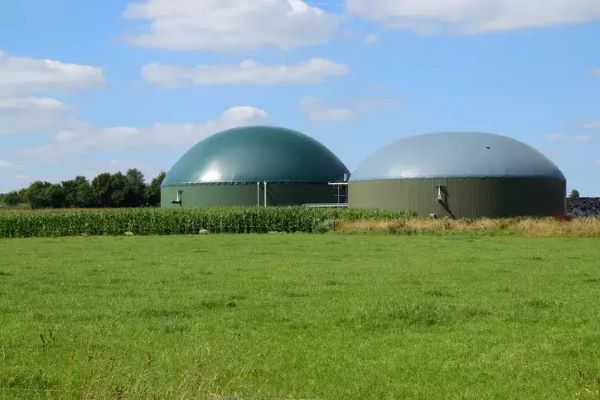
CFD analysis of anaerobic Bio digester-Multiphase flow CFD analysis
. Effective mixing within the digester promotes biological, chemical, and physical uniformity, preventing the creation of dead zones that hinder substrate conversion. Insufficient mixing can lead to reduced digester performance, while excessive mixing may disrupt the digestion process due to high shear forces. Therefore, it is essential to thoroughly understand and examine the optimal mixing techniques in anaerobic digesters. Read More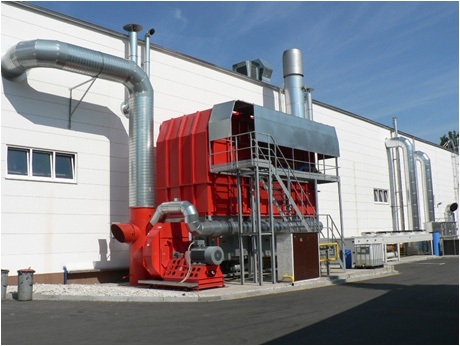
CFD Analysis of Regenerative Thermal Oxidizer
Regenerative thermal oxidizers, commonly referred to as RTOs, are essential in the effective and economical removal of hazardous air pollutants (HAPs) and volatile organic compounds (VOCs) from industrial emissions. These thermal oxidizers are specialized combustion systems incorporated into the ventilation of industrial operations that produce potentially harmful pollutants. Read More
CFD analysis of Multi Band Remote Radio Unit
The advent of 5G technology has brought about unprecedented advancements in wireless communications, enabling faster speeds, lower latency, and increased capacity. These advancements are associated with higher power consumption and increased heat generation in the 5G Remote Radio units.Increasing data rates and network densification require radio units to process larger volumes of data, leading to higher power consumption and heat generation. Environmental factors such as ambient temperature, humidity, and exposure to direct sunlight also impact the thermal aspects of the radio units. Read More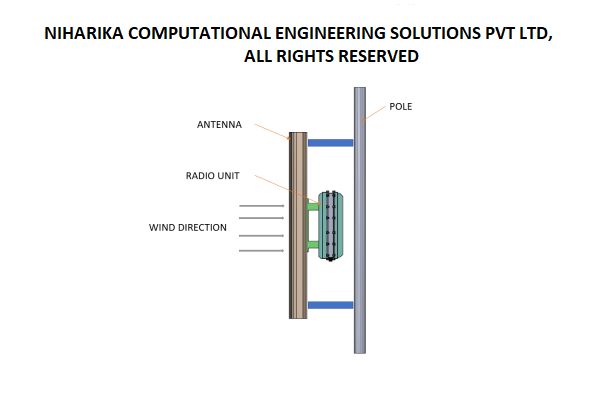
Wind Load analysis for multiband 5G Remote Radio Unit with Antenna using CFD
The seamless operation of base station antennas is of utmost importance for efficient and reliable communication networks. However, these antennas are constantly exposed to various environmental factors that can affect their performance and structural stability. Among these factors, wind load plays a significant role. Read More
DEVELOPMENT OF COOLING SOLUTION FOR GaN RF POWER AMPLIFIER
The demand for high-power and efficient radio frequency (RF) power amplifiers has been steadily increasing across various industries, including wireless communications, radar systems, and satellite communication. GaN (Gallium Nitride) technology has emerged as a game-changer in RF power amplification due to its exceptional performance characteristics and advantages over traditional technologies. GaN technology offers higher power density, improved efficiency, and wide bandwidth capability, setting it apart from traditional technologies like GaAs (Gallium Arsenide) or SiC (Silicon Carbide). Read More