
A vaccine storage facility being constructed by Agility Pharma Logistics in Saudi Arabia requires an in-depth investigation of airflow dynamics and cooling processes within the warehouse through CFD analysis. To address this need, the contractor responsible for the cooling system has engaged Niharika Computational Engineering Solutions Pvt Ltd to perform a thorough CFD analysis and evaluate the air distribution in the proposed ducting system. The project scope includes the creation of a 3D CAD model as needed for the CFD analysis, the generation of a CFD mesh, and the execution of a detailed CFD analysis to assess flow development.
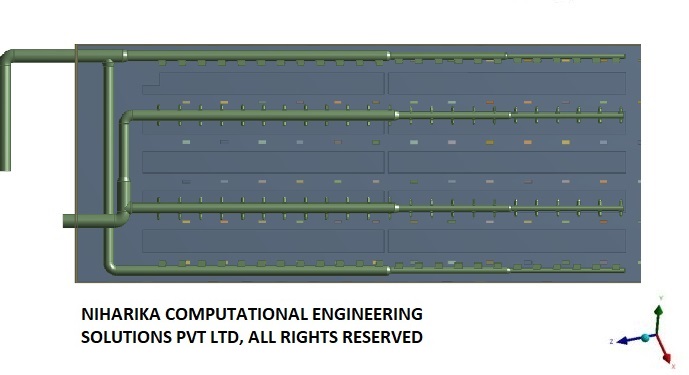
The HVAC contractor has developed an air jet impingement cooling system utilizing traditional engineering calculations. This system requires evaluation of its effectiveness through Computational Fluid Dynamics (CFD) analysis. Ensuring that air reaches all areas where vaccines are stored and maintaining a uniform temperature are critical requirements. The primary goal of the CFD analysis is to examine the flow characteristics within the impinging nozzle system and the resulting temperature distribution.
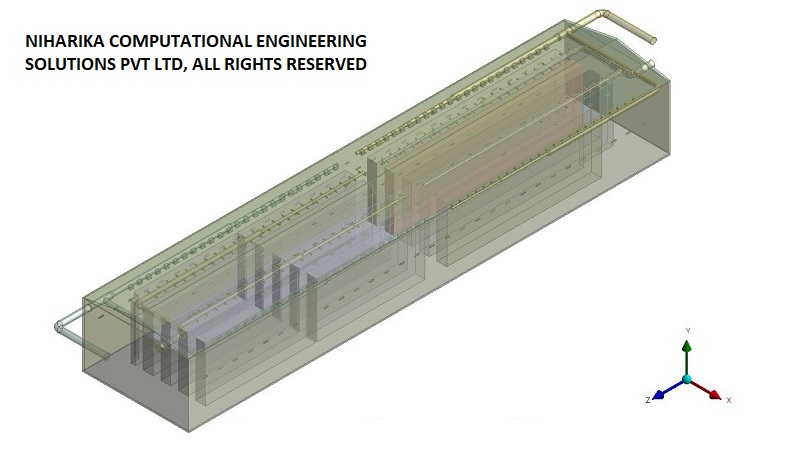
The NCES team develops a detailed three-dimensional (3D) CAD model suitable for Computational Fluid Dynamics (CFD) analysis, using the available two-dimensional (2D) AutoCAD drawings as the primary reference. The model is created using PTC Creo CAD software, translating the original engineering drawings into an accurate three-dimensional representation of the warehouse geometry and HVAC system. During this process, the geometry is reviewed and simplified where necessary to eliminate insignificant details while preserving the essential features that influence airflow and temperature distribution. The resulting 3D CAD model provides the foundation for computational mesh generation and subsequent CFD simulations, enabling the team to evaluate the HVAC systems performance and identify potential airflow distribution and thermal uniformity issues.
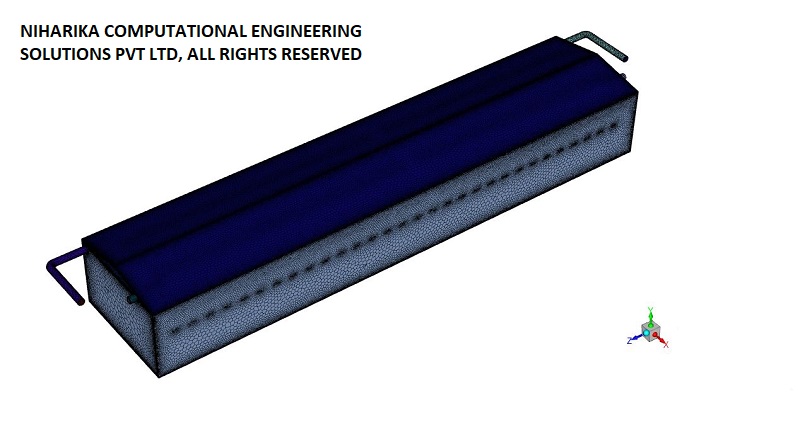
A poly-hexcore computational mesh is generated for the simplified 3D CAD model to ensure accurate and efficient resolution of the airflow and heat transfer characteristics within the warehouse HVAC system. The mesh is locally refined around the supply air duct nozzle units and in regions where steep velocity, pressure, and temperature gradients are expected, enabling better capture of complex flow behavior and air distribution patterns. The overall mesh consists of approximately 16 million cells, providing a suitable level of spatial resolution for analyzing the system's performance. The mesh quality is assessed using relevant quality metrics to ensure compliance with established CFD best practices and to support numerical stability, convergence, and reliable simulation results.
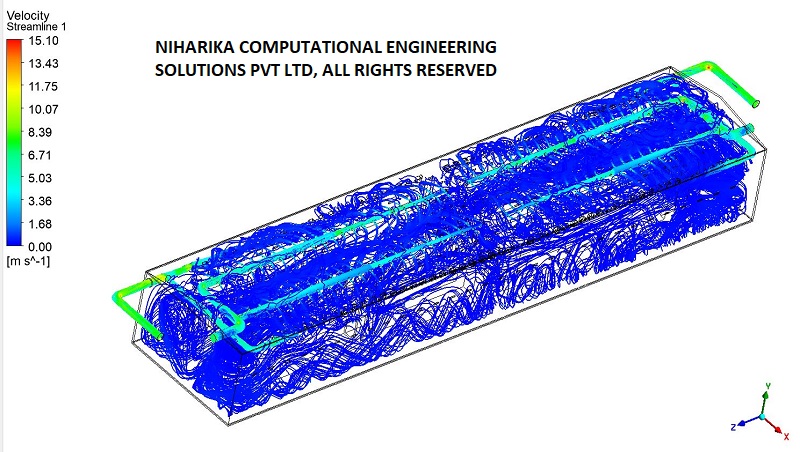
The initial CFD analysis revealed that certain enhancements were required in the nozzle distribution header to achieve a more uniform distribution of supply air across the warehouse. The simulation results helped identify potential flow imbalances within the header that could affect the airflow rate through individual nozzles and consequently influence the overall cooling performance. Based on these findings, the NCES team worked closely with the Client team to evaluate the existing configuration and implement suitable design modifications. The revised header design was subsequently assessed to improve airflow distribution and ensure more consistent delivery of cooling air throughout the storage area. This collaborative, simulation-driven approach helped optimize the HVAC design and enhance the overall effectiveness of the air-jet impingement cooling system.
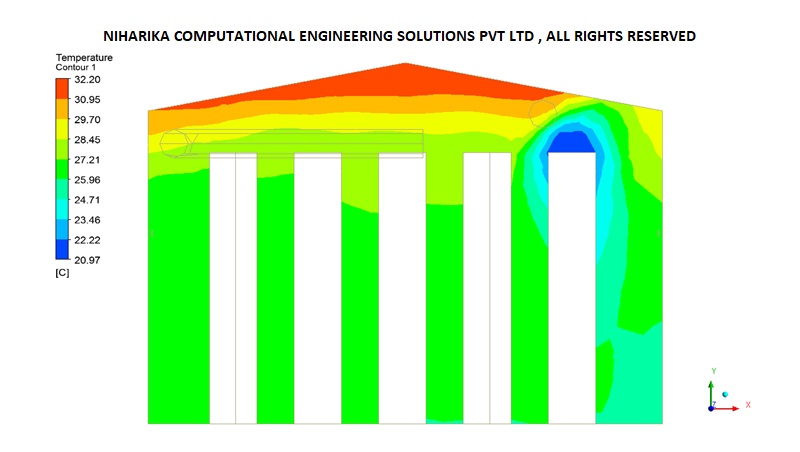
The temperature distribution within the vaccine storage warehouse is evaluated across multiple sectional planes to assess the effectiveness of the HVAC system in maintaining thermal uniformity throughout the storage area. The CFD results indicate that a relatively uniform temperature distribution is achieved within the designated storage zone, demonstrating the effectiveness of the optimized air distribution system in delivering consistent cooling. However, marginally higher temperatures are observed near the ceiling, primarily due to the influence of solar radiation and the associated heat gain through the roof. These localized temperature variations highlight the importance of considering external thermal loads when designing cooling systems for temperature-sensitive storage facilities. Overall, the analysis provides valuable insights into the warehouse thermal performance and helps verify the effectiveness of the HVAC design in maintaining consistent storage conditions.
We Got More
Go through All Our Case Studies
CFD analysis for underground transport tunnel:Al Shamiya Expansion Project,Makkah,Saudi Arabia
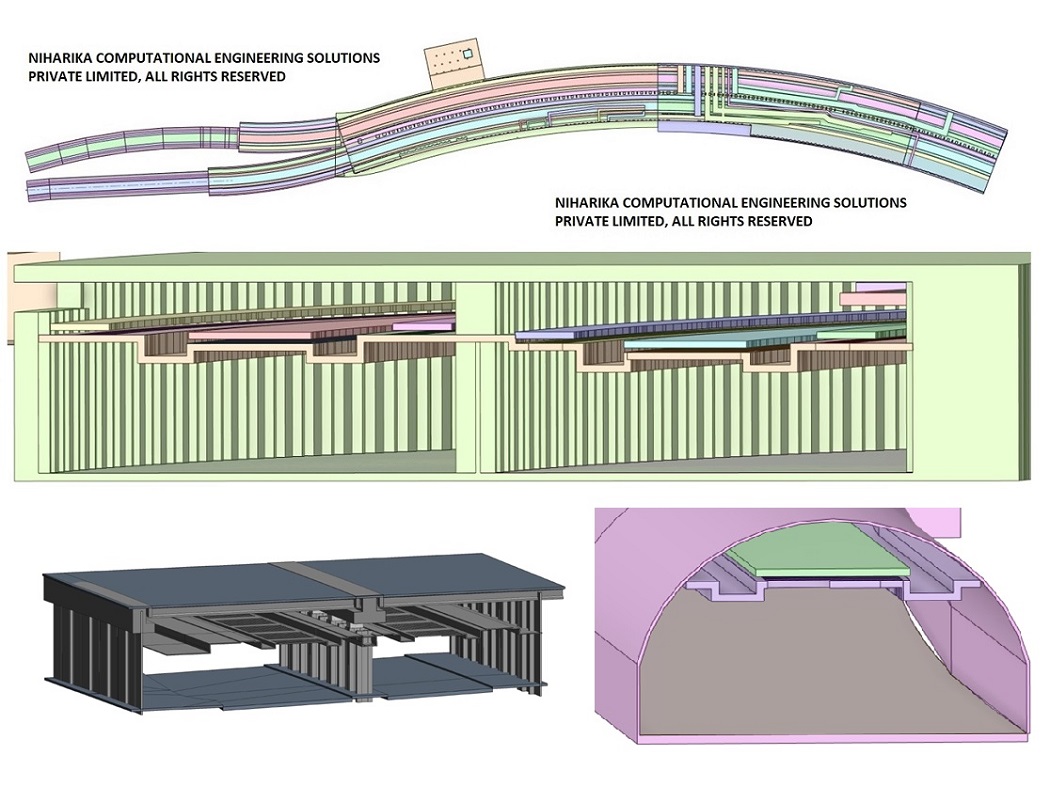
Underground tunnel infrastructure offers faster direct routes and excellent connectivity between communities. The tunnel needs a reliable ventilation system for continuous air provision to limit the concentration of air pollutants during normal tunnel operation and to transport smoke gases out of the tunnel during emergency smoke extraction. Our Computational Fluid Dynamics (CFD) simulation results have enabled our client to understand the flow development in the complete tunnel and gain confidence in the proposed Jet fans and various operating combinations of motorized dampers for smoke extraction in an emergency. Our precise CFD analysis results have enabled our client to make conscious engineering decisions to achieve better resource efficiency and safety compliance. Read More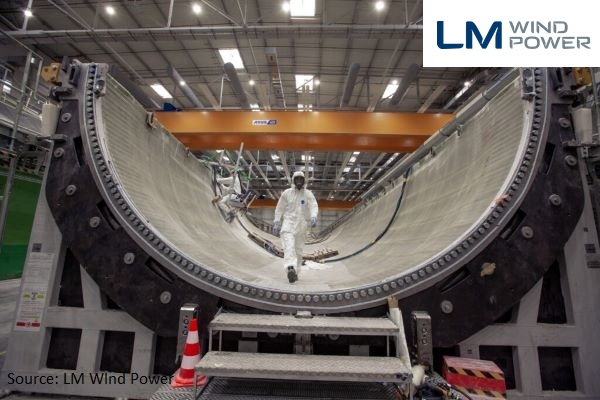
CFD analysis to predict flow development in wind turbine blade mold facility-LM Wind Power-India
We carried out CFD analysis for the HVAC Jet Nozzle system proposed in the Wind turbine blade molding division at the LM wind power blade manufacturing plant in Bangalore. The blade manufacturing plant consists of four molding bays; for each bay, cold air will be supplied through 2 AHU units. Each AHU unit is connected to 40 Jet Nozzles. The main objective of CFD analysis is to analyze airflow, air-impinging angle, and the flow regime. The flow regime plays a significant role from Health and safety perspective. We have explained our results to the Management of LM Wind power and recommended suggestions for Improvement. Read More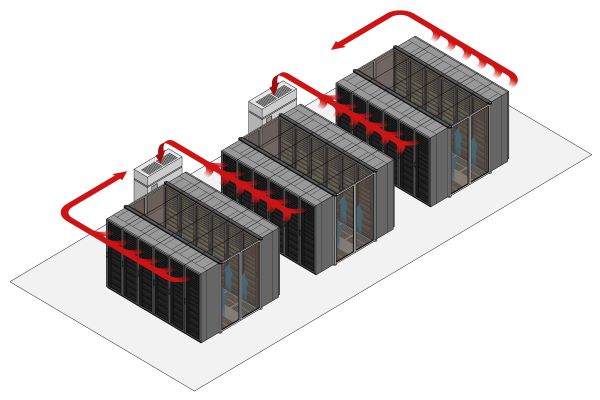
Optimization of hot and cold aisle rack/cabinet configuration in a data center using CFD analysis
The hot and cold aisles in the data center are part of an energy-efficient layout for server racks and other computing equipment. The goal of a hot/cold aisle configuration is to manage airflow in a way that conserves energy and lowers cooling costs. A containment system isolates hot and cold aisles from each other and prevents hot and cold air from mixing. Our client is executing a turnkey contract for a bank data center in Kuwait. We worked with our client from the beginning stage of the project and assisted them with our Computational Fluid Dynamics (CFD) analysis results. Our CFD analysis results have enabled our client to arrive at the best operating sequence of the cooling units. Read More
Turnkey solution to Wind Induced Noise in High Rise Building:Mahindra Windchimes Residential Tower01and02,Bangalore
Mahindra Windchimes is a high-rise residential complex situated on the outskirts of Bangalore, directly exposed to winds from the Bannerghatta reserved forest area. Residents have reported significant acoustic disturbances in the reception and common areas on the ground and first floors of Towers 01 and 02. To address this concern, Mahindra Life Space Developers Limited has engaged Niharika Computational Engineering Solutions Private Limited (NCES) for a comprehensive engineering project. Read More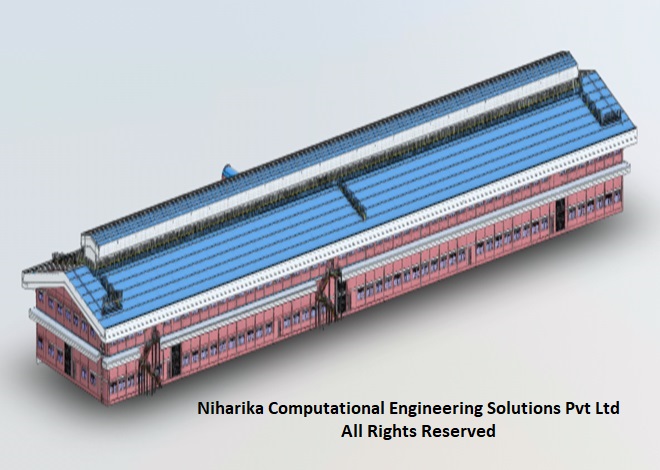
CFD analysis of Ventilation System in Shoe Manufacturing Factory-Taiwan Client
A construction engineering firm based in Taiwan has reached out to us for a CFD analysis to evaluate the effectiveness of the ventilation system in a shoe manufacturing facility currently under development. The project involves performing CFD analysis under various wind speed and ambient temperature scenarios in accordance with ISHRAE standards. Read More